Time has grown more scarce after having a child, so I rarely blog anymore. Though I thought it probably made sense to make at least a quarterly(ish) post so people know I still exist.
One of the big things I have been noticing over the past year or so is an increasing level of automation in ways that are not particularly brilliant. :D
Just from this past week I've had 3 treat encounters on this front.
One marketplace closed my account after I made a bunch of big purchases, likely presuming the purchases were fraudulent based on the volume, new account & an IP address in an emerging market economy. I never asked for a refund or anything like that, but when I believe in something I usually push pretty hard, so I bought a lot. What was dumb about that is they took a person who would have been a whale client & a person they were repeatedly targeting with ads & turned them into a person who would not recommend them ... after being a paying client who spent a lot and had zero specific customer interactions or requests ... an all profit margin client who spent big and then they discarded. Dumb.
Similarly one ad network had my account automatically closed after I had not used it for a while. When I went to reactivate it the person in customer support told me it would be easier to just create a new account as reactivating it would take a half week or more. I said ok, went to set up a new account, and it was auto-banned and they did not disclose why. I asked feedback as to why and they said that they could not offer any but it was permanent and lifetime.
A few months go by and I wondered what was up with that and I logged into my inactive account & set up a subaccount and it worked right away. Weird. But then even there they offer automated suggestions and feedback on improving your account performance and some of them were just not rooted in fact. Worse yet, if they set the default targeting options to overly broad it can cause account issues in a country like Vietnam to where if you click to approve (or even auto approve!) their automated suggestions you then get notifications about how you are violating some sort of ToS or guidelines ... if they can run that logic *after* you activate *their* suggestions, why wouldn't they instead run that logic earlier? How well do they think you will trust & believe in their automated optimization tips if after you follow them you get warning pop overs?
Another big bonus recently was a client was mentioned in a stray spam email. The email wasn't from the client or me, but the fact that a random page on their site was mentioned in a stray spoofed email that got flagged as spam meant that when the ticket notification from the host sent wounded up in spam they never saw it and then the host simply took their site offline. Based on a single email sent from some other server.
Upon calling the host with a friendly WTF they explained to the customer that they had so many customers they have to automate everything. At the same time when it came time to restoring hosting that the client was paying for they suggested the client boot in secure mode, run Apache commands x and y, etc. ... even though they knew the problem was not with the server, but an overmalicious automated response to a stray mention in a singular spam email sent by some third party.
When the host tried to explain that they "have to" automate everything because they have so many customers the customer quickly cut them off with "No, that is a business choice. You could charge different prices or choose to reach out to people who have spent tens of thousands on hosting and have not had any issues in years." He also mentioned how emails can be sent to spam, or be sent to an inbox on the very web host that went offline & was then inaccessible. Then the lovely customer support person stated "I have heard that complaint before" meaning they are aware of the issue, but do not see it as an issue for them. When the customer said they should follow up any emails with an SMS for servers going offline the person said you could do it on your end & then later sent them a 14-page guide for how to integrate the Twillio API.
Nothing in the world is fair. Nothing in the world is equal. But there are smart ways to run a business & dumb ways to run a business.
If you have enough time to write a 14-page integration guide it probably makes sense to just incorporate the feature into the service so the guide is unneeded!
Businesses should treat their heavy spenders or customers with a long history of a clean account with more care than a newly opened account. I had a big hedge fund as a client who would sometimes want rush work done & would do stuff like "hey good job there, throw in an extra $10,000 for yourself as a bonus" on the calls. Whenever they called or emailed they got a quick response. :D
I sort of get that one small marketplace presuming my purchases might have been a scam based on how many I did, how new my account was, and how small they were, but the hosting companies & ad networks that are worth 9 to 12 figures should generally do a bit better. Though in many ways the market cap is a sign the entity is insulated from market pressures & can automate away customer service hoping that their existing base is big enough to offset the customer support horror stories that undermine their brand.
It works.
At least for a while.
A parallel to the above is my Facebook ad account, which was closed about a half decade or so ago due to geographic mismatch. That got removed, but then sort of only half way. If I go to run ads it says that I can't, but then if I go to request an account review to once again explain the geographic difference I can't even get the form to submit unless I edit the HTML of the page on the fly to seed the correct data into the form field as by default it says I can not request a review since I have no ad account.
The flip side of the above is if that level of automation can torch existing paid accounts you have to expect the big data search & social companies are taking a rather skeptical view of new sites or players wanting to rank freely in their organic search results or social feeds. With that being the case, it helps to seed what you can to provide many signals that may remove some of the risks of getting set in the bad pile.
I have seen loads of people have their YouTube or Facebook or whatever such account get torched & only override the automated technocratic persona non grata policies by having followers in another channel who shared their dire situation so it could get flagged for human review and restoration. If that happens to established & widely followed players who have spent years investing into a platform the odds of it happening to most newer sites & players is quite high.
You can play it safe and never say anything interesting, ensuring you are well within the Overtone Window in all aspects of life. That though also almost certainly guarantees failure as it is hard to catch up or build momentum if your defining attribute is being a conformist.
My initial attraction toward SEO and the web was largely that it was like a new and parallel world that bypassed many traditional gatekeepers.
I wrote an ebook which originally had inconsistent formatting and it was riddled with spelling and grammar errors. I learned to write by writing poorly and often while reading great writers daily.
Ultimately it did not matter that my efforts were subpar on some fronts as few people read early copies, and I was receptive to feedback on how to improve it and rapidly did.
The above process ... growing while few people see your ugly work ... is actually one of the advantages of *NOT* taking venture capital. You get to learn at your own pace while risks are low and only really lean into something when you know it is working. You keep making small bets that won't kill you and then when something works better than you expect you can *REALLY* lean into it.
I ultimately did that with SEO, blogging, and a couple other areas I can't mention too much as I had partners on some projects.
This blog never even started as its own site. It was a section on a different site that was spun out to become its own site when it was obvious blogs were being algorithmically over-promoted due to the cross linking from other bloggers and the instant exposure RSS feeds offered.
Instead of begging a book publisher to publish a book I had a higher margin product and the book publishers were begging me. The market was inverted and an outcast won by bypassing traditional gatekeepers.
When SEO was easy it was the same sort of deal. As long as you tried to learn about what the algorithms valued & put effort behind it you could rank for almost anything.
Early on that meant begging, buying, or borrowing links any way you could. If a project was throwing off big money you'd try public relations and to get high quality links to help reinforce the position and increase its longevity. But even junky links worked fantastic back in the day. That's part of why there was so much blog comment spam, referrer spam, expired domains, cheeseball web directories which actually had pagerank in the URL, article directories, private blog networks, all sorts of other paid links like Text-Link-Ads.com, etc. etc. etc.
New channels provide new opportunities. Small players prove the model, drive adoption, and then over time the affiliate or independent publisher is replaced by some big publisher or a scrape-n-displace offering from the central market operators.
The Media Water Cycle
If you take a broad enough view of the world the above sort of water cycle repeatedly happens across all media formats and channels.
New channels emerge
Smaller players and hobbyists are attracted to the new and shiny object
Limited competition & regulation
Channel grows wildly
Channel locked down by regulation or a monopoly
When the channels are new they have the greatest chance of failure, but the biggest potential rewards for early adopters.
As channels are established and competition increases almost all the profit margins get handed over to the central market operator. Everything gets adjust on an "as needed" basis. Anything that hands too much of the profits over to a third party publisher gets cloned by the central network operator, becomes against the terms of service, or is algorithmically or manually neutralized by the central market operators.
affiliates used to be able to sit at the end of the conversion funnel and extract profits from the most valuable keywords, but new algorithmic signals make it hard to stay competitive with limited value add, differentiation, or brand building
commercial keywords are all ads in the search results above the fold & many brands feel the need to bid on their pre-existing brand equity for defensive purposes
Google hid keyword data from organic search & later started to hide some from paid search campaigns as well.
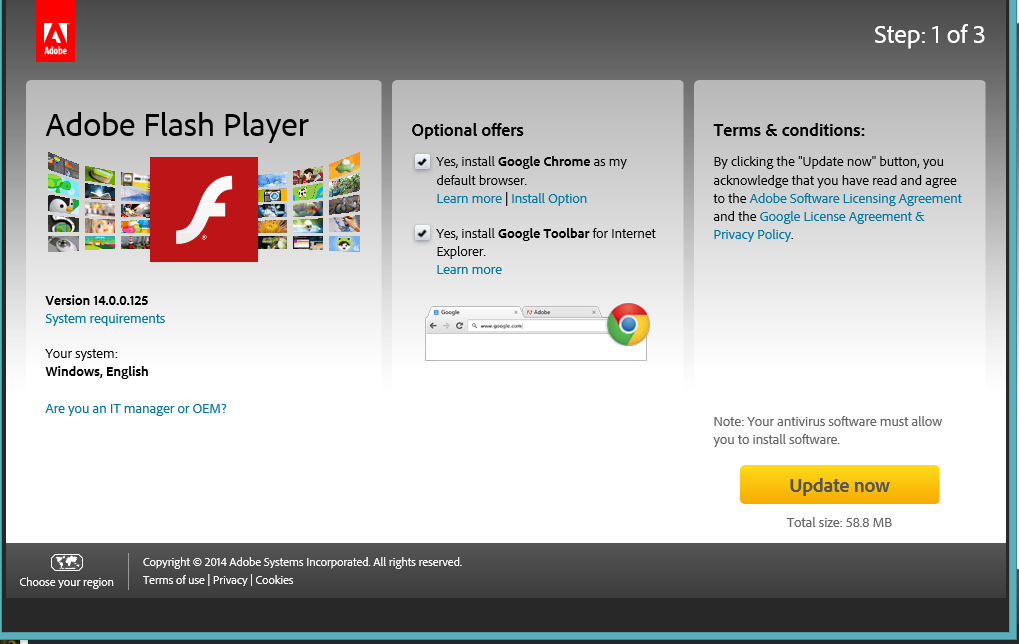
the Chrome browser by default only allows extensions to be downloaded from their official store & while Google got a lot of Chrome distribution through negative option bundling on Flash security updates, they prohibit app bundling in their app store
Apple's iOS and Google Android allow the central network operators to track third party app usage. The Apple Appstore and Google Play have mandatory 30% rakes and may disallow certain widely used apps after those features have been baked into the operating system or cloned and default bundled on new phones.
YouTube takes a 45% revenue share rake & the ad inventory is sold exclusively through Google tools where Google takes up to another 20% rake off the top
Amazon uses your sales data and product design to create what amounts to an effective clone job of it (going so far as to say there are fake safety issues to demand to see where it was manufactured) and then you are forced to bid on your own brand as Amazon gives itself free ads on your brand for their product clone job
Google and Facebook try to suck content into their networks via Instant Articles and AMP. Google gives AMP priority placement in their search results (just like they did previously with Google+, Google Checkout, Google Base / Google Shopping / YouTube / etc etc etc).
Rather than competing, Google and Facebook partnered to illegally bid rig auctions to destroy header bidding & preserve monopoly profit margins, keeping control over external publishers. Google also pushes "privacy" obfuscation which harms third party publishers and third party ad networks while bypassing those firewalls for its own ad network. They are also looking to use their web browser to do away with cookies, further kneecapping other ad networks.
Early Pinterest Ads sent users offsite and often cost only a couple cents a visit while all the internal cross promotion & viral spread across Pinterest was effectively free. Then over time advertisers start getting charged for pins even being opened and getting a user to actually leave Pinterest and click through can cost $5 or $10 a click. Long after I saw Reddit threads about how I was a washed up hack who could not compete in the modern market I literally used Pinterest to seed the growth of a site which now gets about a million organic search visits a month. I recently tried further promoting that site on Pinterest in some new areas, but the economics no longer works for that particular site on that channel.
Oligarchs Don't Stay in Power by Being Fair
If you play by the rules suggested by private market participants you are betting that they won't dramatically change their ecosystem at the drop of a hat and they won't compete against you.
And that bet is a REALLY bad bet.
Networks do not stay on top & in control by stagnating. They change with society & if they are influential enough they also change the structure of society.
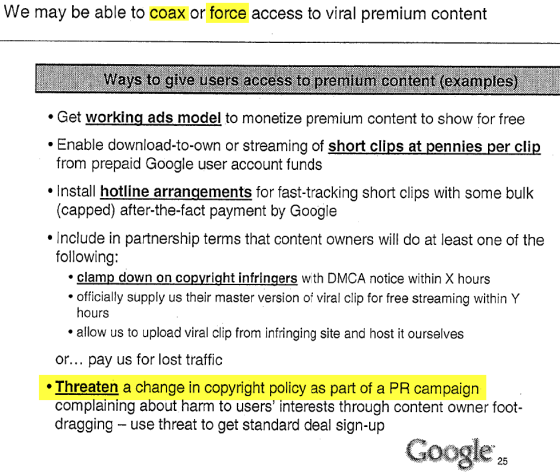
Google employees agreed that, in the future, they should not directly lie to publishers, but instead find ways to convince publishers to act against their interest and remove header bidding on their own.
I could easily write a 100 page blog post on that lawsuit while feeling guilty for leaving many things out.
For example, did you know Google stole AdSense earnings from publishers in the AdTrader ad network and lied about refunding that money to advertisers as AdTrader also managed some of the advertiser accounts which got a $0.00 rebate:
We confirmed through multiple sources, both within and outside of Google, through our Google invoices, and data collected from Google APIs that Google never actually refunded any of the confiscated publisher earnings to the advertisers. In fact, Google’s own support team admitted that they never had a system in place for such refunds.
Google is the network I have studied most and know the most about, though others certainly know Facebook equally well. All the large networks growth the predacious exploits.
Even with limited Facebook usage I know they have at various points in time promoted: games, hype headline fake news, lists and viral quiz junk from Buzzfeed, real actual news sites, the Instant Articles version of real actual news, live video, friend content, etc. Facebook also bought Onavo, a VPN network to track the growth of competing apps. That data was used to inform their WhatsApp purchase. And they could see which features from what external networks they should clone, like when Instagram copied much of SnapChat's offering.
You can follow the Facebook terms of service in everything you do, but the odds of that delivering you real and sustainable profit streams is low.
"You can be unethical and still be legal that’s the way I live my life" - Mark Zuckerberg
Optimize and Reinvent
Few publishers will be experts at both optimizing for the flaw or overpromotion in the current algorithm or network set up AND being good at reinventing themselves to appeal to the algorithms of tomorrow. You ultimately want to use some of any excess profits to build a destination people seek out so you are less dependent on the central network operators.
At the same time, if you ignore the algorithms and just hope for the best you are probably going to lose to a competitor who clones most of your strategy AND manipulates the result set.
You sort of have to figure out what is being over-promoted today AND then try to figure out what will matter tomorrow, while reinvesting profits to the point you are no longer really faking it until you make it.
Realizing that all success is temporary is vital to encourage yourself to take advantage of the opportunities in front of you, while also ensuring you have a plan B in place that acts as a bridge to tomorrow in case your primary channel bombs.
Almost all profit margins (particularly for newer players lacking access to connections, massive cashflows, strong legacy brands, etc.) come from operating somewhere in the gray area. Behave in a manner that is legal, but push the boundaries of terms from other players.
Google funded eHow. Demand Media was ultimately a pump and dump operation. Those who followed it late got their asses handed to them, but those who got in early had plenty of profits they could reinvest in other lower risk ventures. At one point Mahalo publicly listed their page-level earnings data. One of my buddies went through and put that keyword list through TextBroker and uploaded a few hundred articles to an old blog. After about a year that led to a free house for one of their family members. :D
Now Google has far more data to use so it is hard to be anywhere near as exploitative or lowbrow as an eHow or a Mahalo was and expect that stuff to back out.
If you want to stop spam, the most straight forward way to do it is to deny people money because they care about the money and that should be their end goal. But if you really want to stop spam, it is a little bit mean, but what you want to do, is break their spirits. There are parts of Google algorithms specifically designed to frustrate spammers. Some of the things we do is give people a hint their site will drop and then a week or two later, their site actually does drop. So they get a little bit more frustrated. So hopefully, and we’ve seen this happen, people step away from the dark side and say, you know what, that was so much pain and anguish and frustration, let’s just stay on the high road from now on.
...
Some of the stuff I like best is when people say "you know what, this SEO stuff is too unpredictable, I am just going to write some apps."
This past year is the year when "writing some apps" was revealed to have the same core problems that SEO has. Central market operators grabbing their tithings (fight between Apple and entities like Spotify and Epic Games, Google Play pushing through similar 30% rake requirements) and then outright banning apps like Parler from their app stores.
COVID-19 Accelerated Shift to the Web
The COVID-19 pandemic moved everyone and everything online.
The ad money follows the attention stream. If the central network operators pay creators nothing then those creators who have a following will find other ways to monetize. Cygnus was early to SEO and he was early to influencer marketing.
Selling a sliver of attention and then using that funds flow to improve website usability, website design, content quality, brand awareness, reach, etc. ... is usually going to work out better for most people than trying to raise venture capital. Many small bets and incremental improvements yields much higher odds of success than a few really big bets.
Speaking of bets, I follow the stock market a bit because it teaches a lot about human psychology, markets and marketing.
the new approach could also create political problems for policy makers, analysts said. The problem centers on the central bank lending directly to hedge funds, the little-regulated investment vehicles that tend to serve wealthy or institutional investors. ... Though hedge funds are key participants in the market—where they both borrow and lend cash—lending to them directly through the FICC would raise questions about whether the government was backstopping their bets, analysts said.
When the COVID-19 crisis happened optics no longer mattered. Bailouts ensued. Without them levered hedge funds were screwed as many instruments became illiquid and spreads blew out even in bedrock stable markets:
Of particular concern: The hedge funds were using trading strategies similar to those employed by Long-Term Capital Management, a fund that collapsed in 1998 and nearly caused a financial meltdown. The bet that hedge funds were making earlier this year was simple enough. Called a basis trade, it involved exploiting a price difference in the Treasury market, generally by selling Treasury futures contracts — promises to deliver a bond or note at a set price on a set date — and buying the comparatively cheap underlying securities.
Shiny New Object to Bet On
Toward the end of last year and early this year Bitcoin was a rocket ship on the thesis of mass money printing leading to currency debasement and revaluing finite alternatives to fiat cash upward.
If sports and society shut down and people are stuck in their homes gambling is an unsurprising source of entertainment. Barstool Sports founder David Portnoy got this and quickly became a day trader when he didn't have any sports to talk about. :D
Above I mentioned a bit how the Federal Reserve was ultimately bailing out hedge funds. In an easy money market where central banks are printing tons of money what a lot of hedge funds do is buy higher beta growth names while shorting lower beta value stocks, particularly if they feel those companies are destined to go under.
In some cases the short bets believe ideas from a category apply to a specific company in a way they do not. And that can lead to a massive short squeeze, especially if the company announces a buyback and/or insiders buy.
In other cases, the shorts are so confident in their position, they go HOG WILD with low interest leverage and literally short the entire float of a company, trying to drive it into bankruptcy.
Recently Melvin Capital and some other well-connected hedge funds went short GameStop's stock and people who visited a Subreddit named WallStreetBets took the other side of that position.
GME has a 52-week low of $2.57. After being pumped by the Subreddit the stock closed today at $347.51, leading to billions in losses for hedge funds which shorted over 100% of the stock.
According to @S3Partners, short sellers lost $14.3 billion on $GME stock today... just today.— Riley de León (@RileyCNBC) January 27, 2021
The hedge funds that shorted over 100% of a stock ... were market manipulators aiming to manipulate a market. They were counterfeiting:
how do you get 130% of the available shares short? It would seem impossible and is unless someone cheats.
There are some players in the market who have "market maker" status but also trade their own books or have cross-interests with those who do. Allegedly there are "Chinese walls" between those pieces (or interconnected entities.) Quite obviously that is a load of crap because otherwise what you've seen would be impossible but it clearly not only has happened before but is still happening to this day. These entities are how you wind up with short sales where the locate and borrow hasn't happened first and the position remains open across time. This is supposed to be illegal but other than a few hand-slaps in the futures markets for physical commodities I'm not aware of any criminal prosecution for doing it.
And let's be clear here: This practice is counterfeiting.
When they win, that is capitalism.
When they lose, they get bailed out, contact regulators and have pressure applied to prevent THE WRONG PEOPLE from winning.
There are over 2.6 million Wall Street Bet users and only 10,000 hedge funds. The power of the proletariat is now!— Reddit Investors (@redditinvestors) January 27, 2021
You can see a lot of moves coming if you understand internet culture.
does one throw one, two, three, four, or five hundy at $TR on open? :)— uoɹɐɐ (@aaronwall) January 26, 2021
But in many ways we are now where the outcomes will be pre-determined in order to ensure THE RIGHT PEOPLE win.
Wall Street Bets does to the suits what the suits have been doing to main street for a century. Then one call to Reddit, one call to Discord, one call to Robinhood...
It there anyone out there who still doesn't think the system is rigged against the little guys?— Tyler Winklevoss (@tyler) January 28, 2021
Politicians will determine outcomes after the fact.
I'm assuming that the next time a hedge fund starts to make too much money shorting and destroying a business, that they will be de-platformed from their Blomberg terminal and throttled by their prime broker in the name of orderly markets and consumer protection.— Tyler Winklevoss (@tyler) January 28, 2021
The more THE WRONG PEOPLE win, the more intervention there will be to correct the natural order.
The Fed throws in trillions in liquidity & stocks fly higher it's cool. Pelosi loads up on $TSLA calls the stock flies higher it's cool. Bunch of little retail guys load up on calls & stocks fly higher it requires White House & Treasury monitoring & servers get shut down.
Risk is much higher than most perceive because outcomes matter more than process & some multi-generational politically-connected wealth is losing badly to THE WRONG PEOPLE.
Gamestop: Perhaps they got lucky. Maybe just a flash in pan. So dismiss them if u want. But if read their messages u see its not just about money. They're discovering their voice. & that they're powerful. IMO this is partly why wont be so easy for Fed to bailout Eurodollar Mkt...— Santiago Capital (@SantiagoAuFund) January 28, 2021
An upstart online stock broker set trade commission prices to zero. Other brokers followed. And now that broker is telling stock buyers which tickers they are no longer allowed to buy.
When THE WRONG PEOPLE win we find our two sided markets become one way trades.
It's hard to find market manipulation more flagrant than this, but since it's being done to protect the wealthiest and most powerful -- Wall St oligarchs who own and control the establishment wings of both parties -- it's very hard to imagine the government treating it as such: https://t.co/VJnXpMAqkJ— Glenn Greenwald (@ggreenwald) January 28, 2021
Can that be called a marketplace or even an attempt at a remotely honest market?
No.
And it is even worse than it looked initially, as Robinhood not only prevented customers from buying $GME stock, but created a cascading wave of selling by placing "theft by conversion" forced sell orders at market on customer accounts.
When Robinhood placed "at market" sell orders for their clients - WITHOUT THEIR KNOWLEDGE OR PERMISSION - they literally *created* the interim market bottom.
"just like 2008, trading was shut down to save the hides of erstwhile high priests of “creative destruction.” Also just like 2008, there are calls for the government to investigate the people deemed responsible for unapproved market losses. ... it was all well and good for investment banks and executives of phoney-baloney companies to gorge themselves on funhouse profits on a funhouse economy, but when amateurs decided to funnel just a bit of this clown show into their own pockets, finance pros wailed like the grave of Adam Smith had been danced upon."
We are now at the point that the internet is no longer a spot for weirdo outcasts & instead it is reshaping the rest of society.
The times and methods change, but the players remain the same.
If you're looking for an analog on how Citadel might be playing this Melvin/$GME/@RobinhoodApp fiasco, remember that back in the early 2000's Citadel invested in Comscore so they could get exclusive rights to their traffic data DAYS before anyone else. Same game, different name— PAA Research (@ActAccordingly) January 29, 2021
Both of these stories are narratives for our very own Hunger Games, a spectacle that chews up the participants in the arena while delivering enormous profits to the networks (media, financial and political) that put them on. Media networks count their profits in eyeballs, in the attention the Games garner. Financial networks count their profits the old-fashioned way, in the sheer volume of dollar-generating order flow the Games produce. As for politicians, they get their most valuable coin of the modern realm – an issue. The wackos on the left get to propose insane transaction taxes. The wackos on the right get to tell us how much liBeRtY we are enjoying by giving Ken Griffin all of our money. The very serious centrists get to tell us about how we need “a national conversation” about the T+2 settlement issues raised here.
In Need of False Gods
After people get repeatedly screwed spite and revenge become motivators. Some will not mind napalming themselves so long as the entire ship goes down.
Part of a person as awful as Trump getting elected as president was micro-targeted South Park inspired videos sent to minorities reminding them of Hillary Clinton's super predators speech.
And who could forget her laughing about having the head of Libya murdered, a former nation which fell apart to such an extreme degree they had open air slave auctions.
Rescuing the Criminals, Dumping the Costs on You
Another part of Trump getting elected was Obama promising "Hope and Change" but then standing between banks and pitchforks for the intentional and malicious fraud that led to the 2008 economic blowup.
''I think we will look back in 10 years' time and say we should not have done this but we did because we forgot the lessons of the past, and that that which is true in the 1930's is true in 2010,'' said Senator Byron L. Dorgan, Democrat of North Dakota. ''I wasn't around during the 1930's or the debate over Glass-Steagall. But I was here in the early 1980's when it was decided to allow the expansion of savings and loans. We have now decided in the name of modernization to forget the lessons of the past, of safety and of soundness.''
After the internet stock bubble popped the Federal Reserve lowered rates dramatically and left them there far too long, creating a massive hunt for yield. This led to a housing bubble and deteriorating loan standards with fog-a-mirror NINJA loans and similar dominating the market due to the insatiable demand for "risk free" yield. Entities like Citigroup created a ton of bogus mortgage paper they knew was garbage. Their entire board of advisors was repeatedly emailed by Richard M. Bowden about the fraud:
I started issuing warnings in June of 2006 and attempted to get management to address these critical risk issues. These warnings continued through 2007 and went to all levels of the Consumer Lending Group. We continued to purchase and sell to investors even larger volumes of mortgages through 2007. And defective mortgages increased during 2007 to over 80% of production.
If you control the government economic outcomes are determined by politics.
Citigroup was so confident in their control of the political outcomes they continued to dump bad loans on the FHA after Fannie Mae and Freddie Mac were forced into receivership.
THE RIGHT PEOPLE WON.
"Squeezing the oligarchs, though, is seldom the strategy of choice among emerging-market governments. Quite the contrary: at the outset of the crisis, the oligarchs are usually among the first to get extra help from the government, such as preferential access to foreign currency, or maybe a nice tax break, or—here’s a classic Kremlin bailout technique—the assumption of private debt obligations by the government. Under duress, generosity toward old friends takes many innovative forms. Meanwhile, needing to squeeze someone, most emerging-market governments look first to ordinary working folk—at least until the riots grow too large. Eventually, as the oligarchs in Putin’s Russia now realize, some within the elite have to lose out before recovery can begin. It’s a game of musical chairs: there just aren’t enough currency reserves to take care of everyone, and the government cannot afford to take over private-sector debt completely.
...
From long years of experience, the IMF staff knows its program will succeed—stabilizing the economy and enabling growth—only if at least some of the powerful oligarchs who did so much to create the underlying problems take a hit.
...
But there’s a deeper and more disturbing similarity: elite business interests—financiers, in the case of the U.S.—played a central role in creating the crisis, making ever-larger gambles, with the implicit backing of the government, until the inevitable collapse. More alarming, they are now using their influence to prevent precisely the sorts of reforms that are needed, and fast, to pull the economy out of its nosedive. The government seems helpless, or unwilling, to act against them.
...
The third Citigroup bailout, in late February, converted government-owned preferred stock to common stock at a price significantly higher than the market price—a subsidy that probably even most Wall Street Journal readers would miss on first reading." - Simon Johnson, The Quiet Coup
Any government which intentionally subsidizes and promotes massive fraud undermines its legitimacy.
“When you look at who benefits from the Chinese trade surplus and the US trade deficit, it’s the same group of people,” he said. In the US it was the banking elites, while in China it tended to be the political elites, but in both countries ordinary workers lost out
Obama was so rotten he made Trump look like a reasonable choice.
Soulless Corporations Promoting Racism as a PR Diversion
Who were the people hurt worst by Citigroup's fraud?
Believing you can somehow know an individual simply by the color of their skin or by their ethnic heritage is the epitome of ignorance, has been the source for unimaginable evil throughout history, and it is something that woke progressives and white supremacists have in common.— Leonydus Johnson (@LeonydusJohnson) January 30, 2021
Don't blame Citigroup for stealing your house, crashing the economy, and causing millions of people to lose their jobs. Instead, blame white people. Perhaps you could hit an old white man walking down the street in the back of the head with a brick and upload your crime videos to your social media channels. #hope #change
Large & corrupt companies which plunder society pretend to care about subgroups as a cheap form of public relations and to keep their brand from being associated with what they actually do.
Crash the economy, spread misinformation, then as people point fingers back and forth for your bad deeds everyone can blame the victims.
"Not only were many of those people who’d been foreclosed upon or laid off or forced to watch their 401Ks lose half their value still in emotional shock, but the underlying corruption was not exactly easy for them to see. Propaganda blasted out on every channel, to the effect that it was your own fault if you took on an adjustable-rate mortgage that went sideways, or bought too big of a house. People above all feel shame when they can’t pay their debts, and many took it to heart when pundits said the crash was caused by people buying houses they couldn’t afford.
Those criticisms often came out as racial politics, as conservative media figures hammered the theme of the “water drinkers” who crashed the economy at the expense of the “water carriers.” Listening to these takes, resentment in some neighborhoods grew toward the family down the street who’d been foreclosed upon, leaving a boarded-up eyesore on the block and collapsing property values for those left. The Tea Party movement, launched by a rant on CNBC against a proposed bailout for minority homeowners in particular, steered public anger away from Wall Street and toward the “bad behavior” of the “losers” down the street.
...
Why they were pissed off gets to the second question, about the bailouts, ZIRP, the TARP, even the CARES Act. While so many people went into personal tailspins from 2008 on, their nightmares were often compounded watching as the very people who caused the crash — including the banks and mortgage originators who knowingly pumped mountains of fraudulent subprime instruments into the economy — not only got saved but were further enriched, by bailouts and an array of extravagant Fed programs.
Some people got ripped off three times. First, they were personally sold dodgy exotic mortgages. Next, their retirement funds were sold the same kinds of dicey loans in the form of securities. Lastly, when it all blew up, they paid taxes to bail out the whole shooting match." - Matt Taibbi
No bank wants to have the brand Wells Fargo has earned for opening up millions of fake customer accounts to charge fees to, stealing people's cars after charging them for bogus force placed insurance policies, etc.
Executives at those companies concerned primarily with stock option values know being corrupt and donating to BLM is more profitable than running a business honestly & ethically. Fraud is alpha.
If Obama the president matched Obama the candidate the Citigroup board would have been imprisoned, that bank would have been dismantled, and the above "research" about racism which diverts attention away from crimes by the likes of Citigroup would not have been published.
Large institutions - particularly those which are bailed out after committing massive fraud - are able to survive market cycles. Most individuals carry debt of some sort (education, healthcare, housing, auto, other financed purchases). When the economy craters if they lose their job they may also lose their homes and be forced to sell whatever other financial assets they have near the market bottom to afford food.
Institutions vs Individuals
The pain of Citigroup's fraud was felt widely across the economy.
"I was in my early teens during the '08 crisis. I vividly remember the enormous repercussions that the reckless actions by those on Wall Street had in my personal life, and the lives of those close to me. I was fortunate - my parents were prudent and a little paranoid, and they had some food storage saved up. When that crisis hit our family, we were able to keep our little house, but we lived off of pancake mix, and powdered milk, and beans and rice for a year. Ever since then, my parents have kept a food storage, and they keep it updated and fresh. Those close to me, my friends and extended family, were not nearly as fortunate." - ssauronn
US life expectancy was rising almost every year for decades straight. However, it peaked in 2014, and has been in a multi-year sideways trend for the first time in decades. This recent flat-lining in life expectancy has been a uniquely US phenomenon. Life expectancy continues to increase in virtually every other highly-developed country/continent. Life expectancy went up from 2014-present in Japan, the Euro Area, Canada, Australia, etc.
Income & wealth inequality - particularly if it is driven from the combination of the offshoring of the industrial base Clinton & Bush did then the sort of fraud Citigroup did - often leads to a breakdown of cooperation across society, and then, arbitrary violence.
If you make people's lives miserable and tell them they are victims many of them will believe you.
Some of them will live down to the standards you set and see any isolated incident as a pattern of conduct which deserves retribution.
The media tells people economics is violence, words are violence, they are victims, they are owed something, and ... surprise ... that drives violence.
Violence is a (temporary) shortcut to status for young men with lots of testosterone but limited prospects or success in society.
Growing up in a single parent home on welfare only adds further fuel to that fire because there is not only a sense of entitlement and unfairness, but often elevated stress levels and a deep sense of shame and resentment.
My Daughter Was Nearly Killed by Racism
I now have a 4 year old daughter. I have screwed up a great many things in life, but I don't know anybody more confident than she is.
When my wife was pregnant with our only kid I nearly died from a sepsis infection & my daughter was nearly a miscarriage.
The above is not hyperbole.
Here I was in the hospital getting multiple IV antibiotics.
When they told me I might die soon I was like "oh well, that's that."
Then my wife came over and heard that & was crying uncontrollably. I then realized the sort of cascading set of dire outcomes and played it off like the infection was nothing while pushing to do whatever I could to get better fast before other bad outcomes happened.
A couple months later our dog died and my wife then gave an emergency early birth. His death caused an early term birth. If I had died a few months earlier then almost certainly my daughter would have been a miscarriage, then my wife likely would have committed suicide.
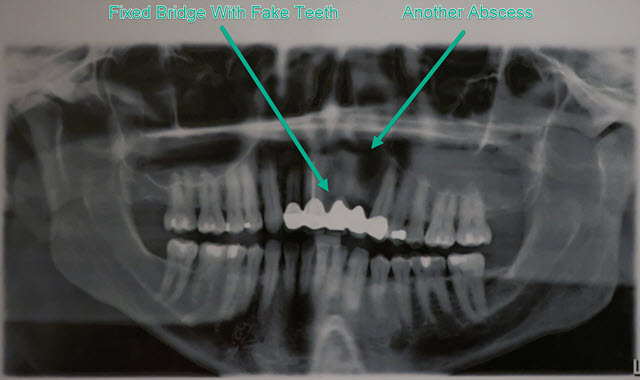
About a decade prior - around the time Obama was making Citigroup whole on their frauds while passing the costs onto the rest of society - a racist black guy sucker punched me while calling me nigger. That chipped the root of one of my teeth. Slowly over the next decade part of my jaw rotted away from an infection that exploded into near death in the middle of my wife's pregnancy. And my daughter nearly had no life.
Writing the above will have many people suggest it is I that am racist for suggesting the racist person who tried to kill me should have had a longer prison sentence for his other previous violent crime convictions, or maybe we should restructure the economy away from financial bubbles, monopolies, and offshoring.
I'm of the view that anyone who is convicted of multiple separate violent crimes should be permanently caged or put to sleep, because when you commit violent acts repeatedly you do not deserve to live as you are not only harming the person you sucker punch or such, but you could also end the life of their unborn child.
The sepsis happened while we were traveling. The initial hotel we were staying at was sold out on the final day so I just happened to stay in a hotel across the street from a hospital. A few hours before jumping on a 15 hour flight I went over to the hospital and they turned me away saying it was just a dental issue. Then my wife brought be back over, they looked at me, and were like ... oh, you are about to die.
That infection came back no less than 3 times. I had to get multiple teeth ripped out. I've had multiple fixed bridges.
If you add up the health expenses, emotional issues (more for my wife than me - much harder to lose someone you love than it is to die), inability to work, having teeth being wired in place, what seems to be dozens of dental visits, getting teeth ripped out repeatedly, etc ... my social "safety" net payment funding kids being born into broken homes with no dad not only nearly liquidated my family, but also cost millions extra.
I absolutely despise race baiters who promote arbitrary violence and the big crimebanks like Citigroup which plunder society leaving people hopeless.
Fuck those people with a rusty chainsaw.
Likewise the Marxist scum that founded Black Lives Matters and is buying about a house a year while promoting people like me being sucker punched by racist low-IQ pay-to-breed garbage or enslaved to pay for the "Marxist's" 3rd, 4th, or 5th estate.
I live on the other side of the world and thus do not get to vote on how 30%, 40%, or (if Biden uncaps FICA) 50%+ of my labor is spent.
Why do we need to remove the FICA cap?
So we can pay fraud-based prices for medicines used by others.
Insulin back up to $1,500 for a 90 day supply. Thank President Biden. Big Pharma's investment paying off. Meanwhile, minimum wage increases looking iffy, trade protections disappearing, low-wage immigration influx incoming, energy jobs cut, and stimulus checks shrinking.— Robert Barnes (@barnes_law) February 11, 2021
Last year when I ACHed income tax payments I sent in over 1,000 times what the president did.
One of my friends told me they didn't blame Trump they blamed the system, but I thought that was an absurd claim as a leader should not only comply with and improve rules, but they should also set an example.
The idea I should pay a thousand times more while having no vote or voice *AFTER* leaving on account of being nearly killed by a racist person who called me nigger, WHILE also being lectured about racism ... is a bit much.
The reasons I liked Trump (before the $750 income tax payments and nutbag January 6th fiasco) were:
he was hated by the media, so they'd cover wrongdoings (even making some up)
until the COVID-19 crisis hit, he was broadening the economy (which is why he got higher minority votes than any republican presidential candidate in decades in spite of the COVID-19 lockdowns)
his administration pushed through an antitrust lawsuit against Google for their monopolistic bundling practices (which will at least restrain Google slightly, provided Biden is not a third Obama term)
The above being said, the January 6th fiasco was absolutely idiotic, and looked like it was something out of South Park.
Obama's Third Term
Google's Eric Schmidt played a vital role in the Obama elections & administration. Their relationship was so close it was called "The Android Administration."
When the FTC investigated Google the Obama administration intervened to prevent justice. To pay back Eric Schmidt for his help on the presidential campaigns Obama's interventions undermined market competition for a decade:
Federal investigators were convinced: Google’s push to take over mobile internet searches was illegal. They had the evidence and urged their bosses to sue. But those politically appointed bosses overruled them. Nearly a decade later, the Justice Department and state regulators are suing Google over the same multibillion-dollar smartphone contracts that investigators for the Federal Trade Commission flagged years ago — and arguing that the deals present some of the strongest evidence that Google has built a monopoly.
"Rubin also touted internally Google’s plan to corner the mobile phone market... In a 2009 email to then-CEO Eric Schmidt, Rubin said a pending contract with Verizon to drop Microsoft’s Bing search engine and sign on with Google would let the company “own the U.S. market.”'
But then the Obama administration full of future tech monopoly lobbyists stepped in and disappeared the case without action. They ignored the attorneys and used the staff economist claims rather than the work of the attorneys to justify disappearing the case based on limited search marketshare for mobile at the time.
About a decade ago Andy Rubin described Google's payments then to mobile carriers as "humungous." Those have only grown larger with time. What was once a small mobile search market is now the majority of search volume. Google now pays Apple at least $12 billion per year to retain default search placement across Apple devices.
We are back to an administration loved by the media. The controversy are hence reduced to casual magazine cover shoots.
Mainstream media: please serve your vital roll in society. Cover that casual photoshoot and not the Darth Vader aspects of Eric Schmidt, expansions of kill lists for suspects, etc.
The mainstream media & tech companies are so proud of election interference they literally brag about it. The following quote sounds like something out of Fox News or the New York Post, but it was published by Time:
the participants want the secret history of the 2020 election told, even though it sounds like a paranoid fever dream–a well-funded cabal of powerful people, ranging across industries and ideologies, working together behind the scenes to influence perceptions, change rules and laws, steer media coverage and control the flow of information. They were not rigging the election; they were fortifying it.
A half-year of violent demonstrations. Unelected private actors changing election laws & interpretations of election laws & illegally bundling private funds to change the outcome of an election. There were even Facebook pages dedicated to paying people to vote. And hundreds of thousands of people nationwide on standby to hold demonstrations just in case the vote does not go as they planned. It's a reach to call that democracy.
There still is some actual journalism being done though. I am glad to see articles like this one, which shows just how absurd this page joebiden.com/opioidcrisis/ is.
How many media outlets are telling you that we should nuke the Keystone pipeline for the environment, but then get the oil from half-way around the world from a murderous thug autocrat, who we give a free pass to for LITERAL MURDER because he has oil?
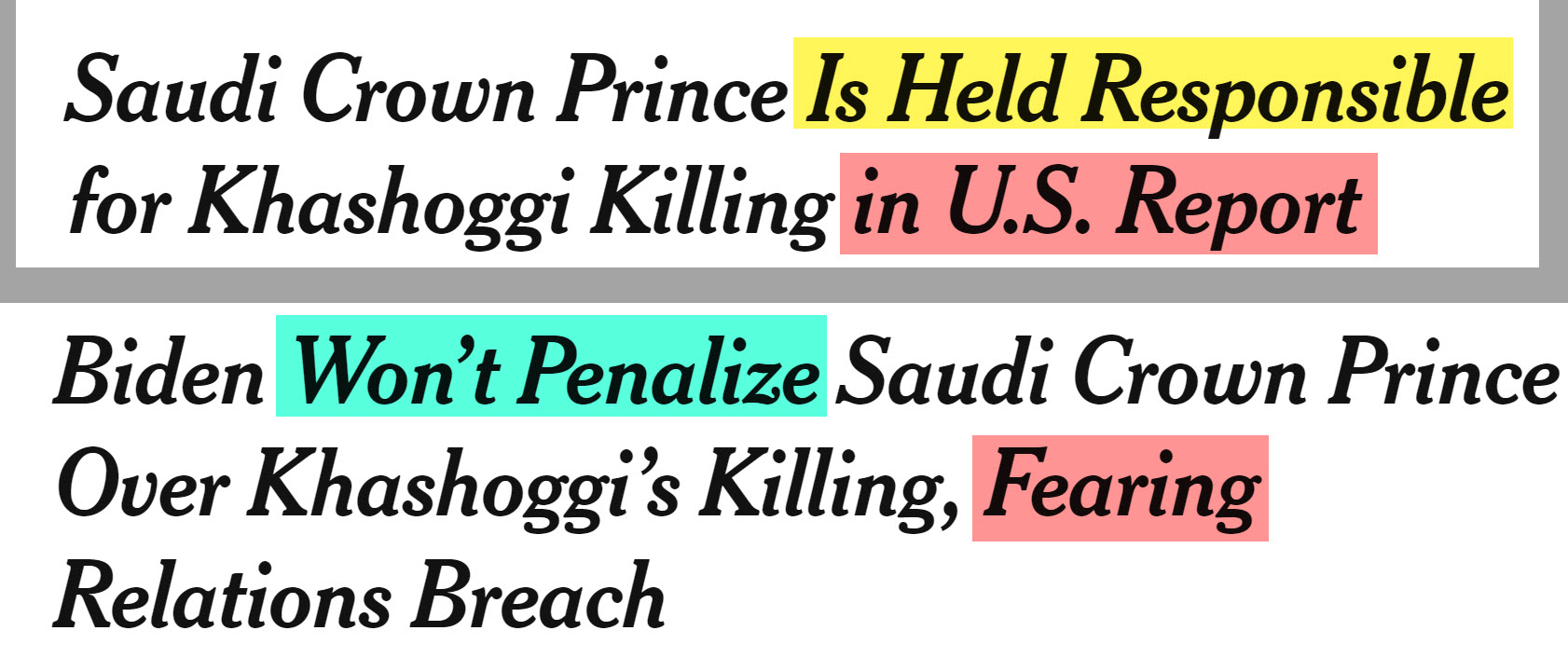
the White House is concealing the names of the seventy-six Saudi operatives to whom they are applying visa bans for participating in Khashoggi’s assassination, absurdly citing “privacy” concerns — as though those who savagely murder and dismember a journalist are entitled to have their identities hidden. ... The U.S. has instituted policies of torture, kidnapping, mass warrantless surveillance, and due-process-free floating prisons in the middle of the ocean where people remain in a cage for almost 20 years despite having never been charged with a crime. The Biden Justice Department is currently trying to imprison Julian Assange for life for the crime of publishing documents that revealed grave crimes by the U.S. government and its allies, and is attempting to do the same to Edward Snowden. One need not look toward the barbarism of U.S. allies to see what propagandistic dreck is the claim that the U.S. stands steadfastly opposed to authoritarianism in the world: just look at the U.S. Government itself.
A lot of the instability in society is not some accidental biproduct of something else, but is rather intentional government policy.
When rule of law only applies to some of the people some of the time instability can be arbitraged in both directions by those with access to capital and political power. Each additional slice of instability is another opportunity to go long or short some sector of the market.
What do you think has happened to the price of oil recently?
“In Extraordinary Statement, Trump Stands With Saudis Despite Khashoggi Killing.” was the Times headline, in a piece that said Trump’s decision was “a stark distillation of the Trump worldview: remorselessly transactional, heedless of the facts, determined to put America’s interests first, and founded on a theory of moral equivalence.” The paper noted, “Even Mr. Trump’s staunchest allies on Capitol Hill expressed revulsion.”
What is important is WHO, not WHAT.
Literal murder doesn't actually matter, unless it can be used to aid in the character smear of someone you dislike.
WHO not WHAT.
"Free" Trade & Deindustrialization
Biden pushed against the "racist" attribution of the COVID-19 crisis to its source in China, though few have considered how "free trade" with a country with over a million slaves would impact living standards as it deindustrializes the country and destroys the middle class.
"Normalizing" relationships with such a country is idiotic. The only way to normalize those relationships is to undermine & crash their political & economic structure - reciprocate what they have done to you. Put the screws to them as they try to do to you, rather than letting them set up parallel systems to undermine you and sew internal division. Brutish authoritarians only understand force.
While we are seeking out a just global society, does LeBron James say "technically the Chinese Uighur slaves who make my Nike shoes are not black, so it is all good! #BLM"
A decade ago, no one would’ve put NBA superstar LeBron James and Apple CEO Tim Cook in the same family album, but here they are now, linked by their fantastic wealth owing to cheap Chinese manufacturing (Nike sneakers, iPhones, etc.) and a growing Chinese consumer market. The NBA’s $1.5 billion contract with digital service provider Tencent made the Chinese firm the league’s biggest partner outside America. In gratitude, these two-way ambassadors shared the wisdom of the Chinese Communist Party with their ignorant countrymen. After an an NBA executive tweeted in defense of Hong Kong dissidents, social justice activist King LeBron told Americans to watch their tongues. “Even though yes, we do have freedom of speech,” said James, “it can be a lot of negative that comes with it.” - Tablet
Free capital flows plus structural trade deficits from "free trade" with slave states = declining domestic living standards.
If you want lives to matter & have good outcomes you need to address the core issues. You want strong families, a growing middle class, and to lift trade partner countries up rather than having much of your citizenry see their living standards reduced to being near that of your worst trade partners.
If you have an average to below average IQ, did not come from wealth, have high living costs, and you must compete against literal slaves your life is probably going to suck.
Declining living standards can be masked temporarily through manipulating economic data, but fake data can't restore hopes and dreams and aspiration for something better.
When I was inside the Fed, it was acknowledged internally that the core PCE was a broken metric that understated & misrepresented true inflation. The decision was made to continue using the broken gauge because Fed models would not work if true inflation was used.
That loss of hope will fuel deaths of despair, desperation, and a desire to believe in just about anything.
The race baiting "equality of outcomes" promoters only throw further fuel on the fire by telling people they are victims and pointing their ire in the wrong direction.
Burning down the local nail salon in a riot is not going to change the Federal Reserve bailing out hedge funds who are manipulating the stock market. It will not make the local economy more vibrant. It will not bring jobs back. It will not fix the free trade with slave state issue.
Instead of acting like an enraged victim, read Kurt Vonnegut's Harrison Bergeron and then consider what skills you can lean into to make a positive change in the world.
The process and outcome of that "free trade" with slave states & papering it over with increasing debt leverage was well known in advance: deindustrialization, consolidation, economic bubbles, lower living standards, more corrupt politics, mass migration waves, etc.
Look no further than this 1994 Charlie Rose video interview of Sir James Goldsmith.
Ultra-wealthy plutocrats were willing to partner with the CCP and sacrifice the US middle class in order to gain more wealth and political power.
Why did they trade with an authoritarian regime and send millions of American manufacturing jobs off to China thereby impoverish working Americans? Because it made them rich. They salved their consciences by telling themselves they had no choice but to deal with China: It was big, productive, and efficient and its rise was inevitable. And besides, the American workers hurt by the deal deserved to be punished—who could defend a class of reactionary and racist ideological naysayers standing in the way of what was best for progress?
But if Donald Trump saw decoupling the United States from China as a way to dismantle the oligarchy that hated him and sent American jobs abroad, he couldn’t follow through on the vision. After correctly identifying the sources of corruption in our elite, the reasons for the impoverishment of the middle classes, and the threats foreign and domestic to our peace, he failed to staff and prepare to win the war he asked Americans to elect him to fight.
And because it was true that China was the source of the China Class’ power, the novel coronavirus coming out of Wuhan became the platform for its coup de grace. So Americans became prey to an anti-democratic elite that used the coronavirus to demoralize them; lay waste to small businesses; leave them vulnerable to rioters who are free to steal, burn, and kill; keep their children from school and the dying from the last embrace of their loved ones; and desecrate American history, culture, and society; and defame the country as systemically racist in order to furnish the predicate for why ordinary Americans in fact deserved the hell that the elite’s private and public sector proxies had already prepared for them.
Alternatively put: "There’s class warfare, all right, but it’s my class, the rich class, that’s making war, and we’re winning." ― Warren Buffett
The terms liberal and conservative are irrelevant in American economic policy, a holdover from the pre FIRE Economy era. The interests of the finance, insurance, and real estate industries will always take precedence in every policy decision.— Eric Janszen (@ejanszen) November 30, 2020
Become an Insider, or Get Used to Losing
For some people the web was a life raft, but a lot of the easy wins have already been had.
And the central network operators are getting more aggressive with scratch-your-back censorship for those in political power.
Sometimes it can be helpful to view the losses as personally targeted if that creates a fire that drives you to do something great
The WSB/GME business is a perfect distillation of populism: people with a vague but correct sense they get a raw deal but who respond with self-destructive nihilism aimed at purely symbolic targets because they are too ignorant and vain to prefer reality to self-righteous fantasy— Dirty Texas Hedge (@HedgeDirty) January 31, 2021
but that fuel burns fast...then what?
fantasy = There's a conspiracy against me
reality = I get shitty, substandard service because I'm a nobody and no one gives a shit about me— Dirty Texas Hedge (@HedgeDirty) January 31, 2021
The only solution to the good ole boys club is to get big enough that you are no longer an outsider.
If @The_DTCC did do this, and it's at least plausible to me that they did, then it really is the establishment shutting down this squeeze by using the plumbing to achieve an outcome they regard as desirable.
That's not the policy goal of regulated clearing and is problematic.— Silent Cal (@KralcTrebor) January 29, 2021
The hot shiny object has a lot of headlines, a lot of competition, and a lot of manipulation.
It is better to do something which is getting less attention but has more staying power.
As more and more services happen online, more and more of business profit margins are flowing online, and the online networks are having a massive impact on the portions of the economy which remain offline.
"You can be unethical and still be legal that’s the way I live my life"
A central problem with the web is network effects and the winner-take-all structure of many markets. It creates a few gigantic winners, but many players along the remaining parts of the value chain get squeezed. You could say that getting hit hard by a Panda or Penguin algorithm update and having a business die overnight is a better outcome than the constant slow squeeze where things get just a little bit worse each month.
Monopolies lower wages. limit opportunities and retard innovation. Most the profits go to key players and shareholders while many jobs get shifted into semi-formal rolls.
You can work for Google and they promise that when you put in your letter at your other job to be one of their temp workers they won't change their mind and fire thousands overnight.
You can work in an Amazon warehouse until you physically break down and they might be so kind as to park an ambulance outside for you instead of wasting profit margin on air conditioning.
Even many of the creative works which are ultimately shunned by companies accustomed to risk-free monopoly profit margins will get squeezed as the work from home / remote work movement will create the next wave of offshoring jobs which people thought you couldn't really outsource.
If you live in a high cost area you had better do something you love so it is highly differentiated.
The only hope for players along the rest of the value chain is a shift away from the ad-dominated web to one where people pay for the services they like and the distribution outcome moves away from a star-based system to more of a bell curve.
The good news is many websites are removing friction and making it easier to test paid media options. Twitter recently acquired and integrated a paid newsletter service. But at the end of the day most people will eventually need to shift away from app stores and other controlled platforms so they can better differentiate their offering and have a sustainable business as platforms shift business models and what they prioritize to keep up with new trends.
The Attention Merchants dominating the web do not want to be low margin payment processors though, so they aren't going to make it easy to build a different web architecture where they become less influential.
Governments the world over are working with the large attention merchants & journalists to promote censorship & distort reality.
Google being based out of Bermuda for many years and growing like a weed during the recent recession while the offline economy cratered will lead to some new complicated global taxes which Janet Yellen has already gave a nod to. Politicians like Senator Elizabeth Warren are suggesting new wealth taxes and a 40% exit tax. If those get approved then the bars on where they kick in will fall after they are in place while the ultra rich find new ways to circumvent the law's intent (e.g. buy hard-to-value illiquid assets or create a self-managed charity that buys up tons of land & then change its status after that law goes away or some loophole is found in it).
Then there is the whole "Great Reset" where if lockdowns didn't kill off your business perhaps some other new regulations will (e.g. maybe carbon taxes to you to subsidize your competitor built off a coal power plant in China).
Upon the recently announced Google update I've seen some people Tweet things like
if you are afraid of algorithm updates, you must be a crappy SEO
if you are technically perfect in your SEO, updates will only help you
I read those sorts of lines and cringe.
Here's why...
Fragility
Different businesses, business models, and business structures have varying degrees of fragility.
If your business is almost entirely based on serving clients then no matter what you do there is going to be a diverse range of outcomes for clients on any major update.
Let's say 40% of your clients are utterly unaffected by an update & of those who saw any noticeable impact there was a 2:1 ratio in your favor, with twice as many clients improving as falling.
Is that a good update? Does that work well for you?
If you do nothing other than client services as your entire business model, then that update will likely suck for you even though the net client impact was positive.
Why?
Many businesses are hurting after the Covid-19 crisis. Entire categories have been gutted & many people are looking for any reason possible to pull back on budget. Some of the clients who won big on the update might end up cutting their SEO budget figuring they had already won big and that problem was already sorted.
Some of the clients that fell hard are also likely to either cut their budget or call endlessly asking for updates and stressing the hell out of your team.
Capacity Utilization Impacts Profit Margins
Your capacity utilization depends on how high you can keep your steady state load relative to what your load looks like at peaks. When there are big updates management or founders can decide to work double shifts and do other things to temporarily deal with increased loads at the peak, but that can still be stressful as hell & eat away at your mental and physical health as sleep and exercise are curtailed while diet gets worse. The stress can be immense if clients want results almost immediately & the next big algorithm update which reflects your current work may not happen for another quarter year.
How many clients want to be told that their investments went sour but the problem was they needed to double their investment while cashflow is tight and wait a season or two while holding on to hope?
Category-based Fragility
Businesses which appear to be diversified often are not.
Everything in hospitality was clipped by Covid-19.
40% of small businesses across the United States have stopped making rent payments.
When restaurants massively close that's going to hit Yelp's business hard.
Auto sales are off sharply.
Likewise there can be other commonalities in sites which get hit during an update. Not only could it include business category, but it could also be business size, promotional strategies, etc.
Sustained profits either come from brand strength, creative differentiation, or systemization. Many prospective clients do not have the budget to build a strong brand nor the willingness to create something that is truly differentiated. That leaves systemization. Systemization can leave footprints which act as statistical outliers that can be easily neutralized.
Sharp changes can happen at any point in time.
For years Google was funding absolute garbage like Mahalo autogenerated spam and eHow with each month being a new record. It is very hard to say "we are doing it wrong" or "we need to change everything" when it works month after month after month.
Then an update happens and poof.
Was eHow decent back in the first Internet bubble? Sure. But it lost money.
Was it decent after it got bought out for a song and had the paywall dropped in favor of using the new Google AdSense program? Sure.
Was it decent the day Demand Media acquired it? Sure.
Was it decent on the day of the Demand Media IPO? Almost certainly not. But there was a lag between that day and getting penalized.
Panda Trivia
The first Panda update missed eHow because journalists were so outraged by the narrative associated with the pump-n-dump IPO. They feared their jobs going away and being displaced by that low level garbage, particularly as the market cap of Demand Media eclipsed the New York Times.
Journalist coverage of the pump-n-dump IPO added credence to it from an algorithmic perspective. By constantly writing hate about eHow they made eHow look like a popular brand, generating algorithmic signals that carried the site until Google created an extension which allowed journalists and other webmasters to vote against the site they had been voting for through all their outrage coverage.
Algorithms & the Very Visible Hand
And all algorithmic channels like organic search, the Facebook news feed, or Amazon's product pages go through large shifts across time. If they don't, they get gamed, repetitive, and lose relevance as consumer tastes change and upstarts like Tiktok emerge.
"The startups of the Rebellion benefited tremendously from 2009 to 2012. But from 2013 on, the spoils of smartphone growth went to an entirely different group: the Empire. ... A network effect to engage your users, AND preferred distribution channels to grow, AND the best resources to build products? Oh my! It’s no wonder why the Empire has captured so much smartphone value and created a dark time for the Rebellion. ... Now startups are fighting for only 5% of the top spots as the Top Free Apps list is dominated by incumbents. Facebook (4 apps), Google (6 apps), and Amazon (4 apps) EACH have as many apps in the Top 100 list as all the new startups combined."
Over time the general trend was edge rank of professional publishers fell as a greater share of inventory went to content from friends & advertisers. The metrics associated with the ads often overstated their contribution to sales due to bogus math and selection bias.
“I did 1.8 billion views last year,” [Ryan Hamilton] said. “I made no money from Facebook. Not even a dollar.” ... "While waiting for Facebook to invite them into a revenue-sharing program, some influencers struck deals with viral publishers such as Diply and LittleThings, which paid the creators to share links on their pages. Those publishers paid top influencers around $500 per link, often with multiple links being posted per day, according to a person who reached such deals."
All unproven channels need to start somewhat open to gain usage, feedback & marketshare. Once they become real businesses they clamp down. Some of the clamp down can be editorial, forced by regulators, or simply anticompetitive monpolistic abuse.
"Google’s response to the threat from AppNexus was that of a classic monopolist. They announced that YouTube would no longer allow third-party advertising technology. This was a devastating move for AppNexus and other independent ad technology companies. YouTube was (and is) the largest ad-supported video publisher, with more than 50% market share in most major markets. ... Over the next few months, Google’s ad technology team went to each of our clients and told them that, regardless of how much they liked working with AppNexus, they would have to also use Google’s ad technology products to continue buying YouTube. This is the definition of bundling, and we had no recourse. Even WPP, our largest customer and largest investors, had no choice but to start using Google’s technology. AppNexus growth slowed, and we were forced to lay off 100 employees in 2016."
Everyone Else
Every moderately large platform like eBay, Etsy, Zillow, TripAdvisor or the above sorts of companies runs into these sorts of issues with changing distribution & how they charge for distribution.
Building Anti-fragility Into Your Business Model
Growing as fast as you can until the economy craters or an algorithm clips you almost guarantees a hard fall along with an inability to deal with it.
Markets ebb and flow. And that would be true even if the above algorithmic platforms did not make large, sudden shifts.
Build Optionality Into Your Business Model
If your business primarily relies on publishing your own websites or you have a mix of a few clients and your own sites then you have a bit more optionality to your approach in dealing with updates.
Even if you only have one site and your business goes to crap maybe you at least temporarily take on a few more consulting clients or do other gig work to make ends meet.
Focus on What is Working
If you have a number of websites you can pour more resources into whatever sites reacted positively to the update while (at least temporarily) ignoring any site that was burned to a crisp.
Ignore the Dead Projects
The holding cost of many websites is close to zero unless they use proprietary and complex content management systems. Waiting out a penalty until you run out of obvious improvements on your winning sites is not a bad strategy. Plus, if you think the burned site is going to be perpetually burned to a crisp (alternative health anyone?) then you could sell links off it or generate other alternative revenue streams not directly reliant on search rankings.
Build a Cushion
If you have cash savings maybe you guy out and buy some websites or domain names from other people who are scared of the volatility or got clipped for issues you think you could easily fix.
When the tide goes out debt leverage limits your optionality. Savings gives you optionality. Having slack in your schedule also gives you optionality.
The person with a lot of experience & savings would love to see highly volatile search markets because those will wash out some of the competition, curtail investments from existing players, and make other potential competitors more hesitant to enter the market.
Much like publishers, employees at the big tech monopolies can end up little more than grist.
Products & product categories come & go, but even if you build "the one" you still may lose everything in the process.
Imagine building the most successful consumer product of all time only to realize:'The iPhone is the reason I'm divorced,' Andy Grignon, a senior iPhone engineer, tells me. I heard that sentiment more than once throughout my dozens of interviews with the iPhone's key architects and engineers.'Yeah, the iPhone ruined more than a few marriages,' says another.
"There's been essentially no dispersion of tech jobs,' said Mr. Kolko, who conducted the research.'Which metro is the next Silicon Valley? The answer is none, at least for the foreseeable future. Silicon Valley still stands apart.'
Making $180,000 a year can price one out of the local real estate market, requiring living in a van or a two hour commute. An $81,000 salary can require a 3 hour commute.
If you are priced out of the market by the monopoly de jour, you can always pray!
The hype surrounding transformative technology that disintermediates geography & other legacy restraints only lasts so long: "The narrative isn't the product of any single malfunction, but rather the result of overhyped marketing, deficiencies in operating with deep learning and GPUs and intensive data preparation demands."
A manager named LFEditorCat told the raters in chat that the pay cut had come at the behest of'Big G's lawyers,' referring to Google. Later, a rater asked Jackson,'If Google made this change, can Google reverse this change, in theory?' Jackson replied,'The chances of this changing are less than zero IMO.'
America really is undergoing a radical change in the structure of our political economy. And yet this revolutionary shift of power, control, and wealth has remained all but unrecognized and unstudied ... Since the 1990s, large companies have increasingly relied on temporary help to do work that formerly was performed by permanent salaried employees. These arrangements enable firms to hire and fire workers with far greater flexibility and free them from having to provide traditional benefits like unemployment insurance, health insurance, retirement plans, and paid vacations. The workers themselves go by many different names: temps, contingent workers, contractors, freelancers. But while some fit the traditional sense of what it means to be an entrepreneur or independent business owner, many, if not most, do not-precisely because they remain entirely dependent on a single power for their employment.
Dedication & devotion are important traits. Are you willing to do everything you can to go the last mile? "Lyft published a blog post praising a driver who kept picking up fares even after she went into labor and was driving to the hospital to give birth."
About 1.8 million workers were out of the labor force for "other" reasons at the beginning of this year, meaning they were not retired, in school, disabled or taking care of a loved one, according to Atlanta Federal Reserve data. Of those people, nearly half -- roughly 881,000 workers -- said in a survey that they had taken an opioid the day before, according to a study published last year by former White House economist Alan Krueger."
After a few years of buildup, Obamacare kicked the scams into high gear. .... With exchange plans largely locked into paying for medically required tests, patients (and their urine) became gold mines. Some labs started offering kickbacks to treatment centers, who in turn began splitting the profits with halfway houses that would tempt clients with free rent and other services. ... Street-level patient brokers and phone room lead generators stepped up to fill the beds with strategies across the ethical spectrum, including signing addicts up for Obamacare and paying their premiums.
The story says Wall Street is *unhappy* at the too low $475,000 price tag for this medicine. https://t.co/Fw4RXok2V1— Matt Stoller (@matthewstoller) September 4, 2017
When platform monopolies dictate the roll-out of technology, there is less and less innovation, fewer places to invest, less to invent. Eventually, the rhetoric of innovation turns into DISRUPT, a quickly canceled show on MSNBC, and Juicero, a Google-backed punchline.
This moment of stagnating innovation and productivity is happening because Silicon Valley has turned its back on its most important political friend: antitrust. Instead, it's embraced what it should understand as the enemy of innovation: monopoly.
Some marketing/framing savvy pple figured out that the most effective way to build a fascist movement is to call it: antifascist.— NassimNicholasTaleb (@nntaleb) August 31, 2017
Celebrate diversity in all aspects of life - exceptthoughtTM.
Identity politics 2.0 wars come to Google. Oh no. But mass spying is fine since its equal opportunity predation.https://t.co/BArOsWb1ho— Julian Assange (@JulianAssange) August 6, 2017
Mob rule - with a splash of violence - for the win.
Social justice is the antithesis of justice.
It is the aspie guy getting fired for not understanding the full gender "spectrum."
Google exploits the mental abilities of its aspie workers but lets them burn at the stake when its disability, too much honesty, manifests. pic.twitter.com/Sd1A0KJvc0— Julian Assange (@JulianAssange) August 15, 2017
It is the repression of truth: "Truth equals virtue equals happiness. You cannot solve serious social problems by telling lies or punishing people who tell truth."
Most meetings at Google are recorded. Anyone at Google can watch it. We're trying to be really open about everything...except for this. They don't want any paper trail for any of these things. They were telling us about a lot of these potentially illegal practices that they've been doing to try to increase diversity. Basically treating people differently based on what their race or gender are. - James Damore
The recursive feedback loops & reactionary filtering are so bad that some sites promoting socialism are now being dragged to the Google gulag.
In a set of guidelines issued to Google evaluators in March, elaborated in April by Google VP of Engineering Ben Gomes, the company instructed its search evaluators to flag pages returning'conspiracy theories' or'upsetting' content unless'the query clearly indicates the user is seeking an alternative viewpoint.' The changes to the search rankings of WSWS content are consistent with such a mechanism. Users of Google will be able to find the WSWS if they specifically include'World Socialist Web Site' in their search request. But if their inquiry simply includes term such as'Trotsky,''Trotskyism,''Marxism,''socialism' or'inequality,' they will not find the site.
Every website which has a following & challenges power is considered "fake news" or "conspiracy theory" until many years later, when many of the prior "nutjob conspiracies" turn out to be accurate representations of reality.
Under its new so-called anti-fake-news program, Google algorithms have in the past few months moved socialist, anti-war, and progressive websites from previously prominent positions in Google searches to positions up to 50 search result pages from the first page, essentially removing them from the search results any searcher will see. Counterpunch, World Socialsit Website, Democracy Now, American Civil liberties Union, Wikileaks are just a few of the websites which have experienced severe reductions in their returns from Google searches.
What does the above say about tech monopolies wanting to alter the structure of society when their internal ideals are based on fundamental lies? They can't hold an internal meeting addressing sacred cows because "ultimately the loudest voices on the fringes drive the perception and reaction" but why not let them distribute swarms of animals with bacteria & see what happens? Let's make Earth a beta.
FANG
The more I study the macro picture the more concerned I get about the long term ramifications of a financially ever more divergent society. pic.twitter.com/KoY60fAfe2— Sven Henrich (@NorthmanTrader) August 9, 2017
Over the past three decades, the U.S. government has permitted corporate giants to take over an ever-increasing share of the economy. Monopoly-the ultimate enemy of free-market competition-now pervades every corner of American life ... Economic power, in fact, is more concentrated than ever: According to a study published earlier this year, half of all publicly traded companies have disappeared over the past four decades.
Nike selling on Amazon=media cos selling to Netflix=news orgs publishing straight to Facebook. https://t.co/3hpVIsymXD— Miriam Gottfried (@miriamgottfried) June 28, 2017
It is no coincidence that from 2012 to 2016, Amazon, Google and Facebook's revenues increased by $137 billion and the remaining Fortune 497 revenues contracted by $97 billion.
Netflix, Amazon, Apple, Google, Facebook ... are all aggressively investing in video content as bandwidth is getting cheaper & they need differentiated content to drive subscription revenues. If the big players are bidding competitively to have differentiated video content that puts a bid under some premium content, but for ad-supported content the relatively high CPMs on video content might fall sharply in the years to come.
From a partner perspective, if you only get a percent of revenue that transfers all the risk onto you, how is the new Facebook video feature going to be any better than being a YouTube partner? As video becomes more widespread, won't that lower CPMs?
One publisher said its Facebook-monetized videos had an average CPM of 15 cents. A second publisher, which calculated ad rates based on video views that lasted long enough to reach the ad break, said the average CPM for its mid-rolls is 75 cents. A third publisher made roughly $500 from more than 20 million total video views on that page in September.
That's how monopolies work. Whatever is hot at the moment gets pitched as the future, but underneath the hood all compliments get commoditized:
as a result of this increased market power, the big superstar companies have been raising their prices and cutting their wages. This has lifted profits and boosted the stock market, but it has also held down real wages, diverted more of the nation's income to business owners, and increased inequality. It has also held back productivity, since raising prices restricts economic output.
If in five years I'm just watching NFL-endorsed ESPN clips through a syndication deal with a messaging app, and Vice is just an age-skewed Viacom with better audience data, and I'm looking up the same trivia on Genius instead of Wikipedia, and'publications' are just content agencies that solve temporary optimization issues for much larger platforms, what will have been point of the last twenty years of creating things for the web?
We've been in the celebration phase all year as Microsoft, Google, Amazon, Apple, Netflix and Facebook take their place in the pantheon of classic American monopolists. These firms and a few others, it is now widely acknowledged, dominate everything. There is no day-part in which they do not dominate the battle for consumers' attention. There is no business safe from their ambitions. There are no industries in which their influence and encroachment are not currently being felt.
The web shifts information-based value chains to universal distribution at zero marginal cost, which shifts most of the value extraction to the attention merchants.
despite a user base near the size of Instagram's, Tumblr never quite figured out how to make money at the level Facebook has led managers and shareholders to expect ... running a platform for culture creation is, increasingly, a charity operation undertaken by larger companies. Servers are expensive, and advertisers would rather just throw money at Facebook than take a chance
Those resting in the shadows of the giants will keep getting crushed: "They let big tech crawl, parse, and resell their IP, catalyzing an extraordinary transfer in wealth from the creators to the platforms."
The. Problem. Everywhere. Is. Unaccountable. Monopoly. Power. That. Is. Why. Voters. Everywhere. Are. Angry.— Matt Stoller (@matthewstoller) September 24, 2017
They'll take the influence & margins, but not the responsibility normally associated with such a position:
"Facebook has embraced the healthy gross margins and influence of a media firm but is allergic to the responsibilities of a media firm," Mr. Galloway says. ... For Facebook, a company with more than $14 billion in free cash flow in the past year, to say it is adding 250 people to its safety and security efforts is'pissing in the ocean,' Mr. Galloway says.'They could add 25,000 people, spend $1 billion on AI technologies to help those 25,000 employees sort, filter and ID questionable content and advertisers, and their cash flow would decline 10% to 20%.'
Deregulation, as commonly understood, is actually just moving regulatory authority from democratic institutions to private ones.— Matt Stoller (@matthewstoller) September 23, 2017
Practically speaking, bypassing DRM isn't hard (Google's version of DRM was broken for six years before anyone noticed), but that doesn't matter. Even low-quality DRM gets the copyright owner the extremely profitable right to stop their customers and competitors from using their products except in the ways that the rightsholder specifies. ... for a browser to support EME, it must also license a "Content Decryption Module" (CDM). Without a CDM, video just doesn't work. All the big incumbents advocating for DRM have licenses for CDMs, but new entrants to the market will struggle to get these CDMs, and in order to get them, they have to make promises to restrict otherwise legal activities ... We're dismayed to see the W3C literally overrule the concerns of its public interest members, security experts, accessibility members and innovative startup members, putting the institution's thumb on the scales for the large incumbents that dominate the web, ensuring that dominance lasts forever.
More significantly, the GDPR extends the concept of'personal data' to bring it into line with the online world. The regulation stipulates, for example, that an online identifier, such as a device's IP address, can now be personal data. So next year, a wide range of identifiers that had hitherto lain outside the law will be regarded as personal data, reflecting changes in technology and the way organisations collect information about people. ... Facebook and Google should be OK, because they claim to have the'consent' of their users. But the data-broking crowd do not have that consent.
Oath's video unit, however, had begun doubling down on the type of highly shareable,'snackable' bites that people gobble up on their smartphones and Facebook feeds. ... . What frustrates her like nothing else, two people close to Couric told me, is when she encounters fans and they ask her what she's up to these days.
When content is atomized into the smallest bits & recycling is encouraged only the central network operators without editorial content costs win.
Even Reddit is pushing crappy autoplay videos for the sake of ads. There's no chance of it working for them, but they'll still try, as Google & Facebook have enviable market caps.
Some suggest the repackaging and reposting of ads highlights the'pivot to video' mentality many publishers now demonstrate. The push to churn out video content to feed platforms and to attract potentially lucrative video advertising is increasingly viewed as a potential solution to an increasingly challenging business model problem.
Publishers might also get paid a commission on any sales they help drive by including affiliate links alongside the videos. If these links drive users to purchase the products, then the publisher gets a cut.
Is there any chance recycling low quality infomercial styled ads as placeholder auto-play video content to run prerolls on is a sustainable business practice?
If that counts as strategic thinking in online publishing, count me as a short.
For years whenever the Adobe Flash plugin for Firefox had a security update users who hit the page got a negative option install of Google Chrome as their default web browser. And Google constantly markets Chrome across their properties:
Google is aggressively using its monopoly position in Internet services such as Google Mail, Google Calendar and YouTube to advertise Chrome. Browsers are a mature product and its hard to compete in a mature market if your main competitor has access to billions of dollars worth of free marketing.
It only takes a single yes on any of those billions of ad impressions (or an accidental opt in on the negative option bundling with security updates) for the default web browser to change permanently.
There's no way Mozilla can compete with Google on economics trying to buy back an audience.
Mozilla is willing to buy influence, too - particularly in mobile, where it's so weak. One option is paying partners to distribute Firefox on their phones.'We're going to have to put money toward it,' Dixon says, but she expects it'll pay off when Mozilla can share revenue from the resulting search traffic.
They have no chance of winning when they focus on wedge issues like fake news. Much like their mobile operating system, it is a distraction. And the core economics of paying for distribution won't work either. How can Mozilla get a slice of an advertiser's ad budget through Yahoo through Bing & compete against Google's bid?
Google is willing to enter uneconomic deals to keep their monopoly power. Look no further than the $1 billion investment they made in AOL which they quickly wrote down by $726 million.
Google pays Apple $3 billion PER YEAR to be the default search provider in Safari. Verizon acquired Yahoo! for $4.48 billion. There's no chance of Yahoo! outbidding Google for default Safari search placement & if Apple liked the idea they would have bought Yahoo!. It is hard to want to take a big risk & spend billions on something that might not back out when you get paid billions to not take any risk.
Even Microsoft would be taking a big risk in making a competitive bid for the Apple search placement. Microsoft recently disclosed "Search advertising revenue increased $124 million or 8%." If $124 million is 8% then their quarterly search ad revenue is $1.674 billion. To outbid Google they would have to bid over half their total search revenues.
Regulatory Capture
"I have a foreboding of an America in which my children's or grandchildren's time - when the United States is a service and information economy; when nearly all the key manufacturing industries have slipped away to other countries; when awesome technological powers are in the hands of a very few, and no one representing the public interest can even grasp the issues; when the people have lost the ability to set their own agendas or knowledgeably question those in authority; when, clutching our crystals and nervously consulting our horoscopes, our critical faculties in decline, unable to distinguish between what feels good and what's true, we slide, almost without noticing, back into superstition and darkness. The dumbing down of america is most evident in the slow decay of substantive content in the enormously influential media, the 30-second sound bites (now down to 10 seconds or less), lowest common denominator programming, credulous presentations on pseudoscience and superstition, but especially a kind of celebration of ignorance." - Carl Sagan, The Demon-haunted World, 1996
Fascinating. Obama felt he had zero authority even while President except to ask nicely. Zero will to govern. https://t.co/935OaRpV2X— Matt Stoller (@matthewstoller) September 25, 2017
The monopoly platforms have remained unscathed by government regulatory efforts in the U.S. Google got so good at lobbying they made Goldman Sachs look like amateurs. It never hurts to place your lawyers in the body that (should) regulate you: "Wright left the FTC in August 2015, returning to George Mason. Just five months later, he had a new position as'of counsel' at Wilson Sonsini, Google's primary outside law firm."
Remember how Google engineers repeatedly announced how people who bought or sold links without clear machine & human readable disclosure are scum? One way to take .edu link building to the next level is to sponsor academic research without disclosure:
Some researchers share their papers before publication and let Google give suggestions, according to thousands of pages of emails obtained by the Journal in public-records requests of more than a dozen university professors. The professors don't always reveal Google's backing in their research, and few disclosed the financial ties in subsequent articles on the same or similar topics, the Journal found. ... Google officials in Washington compiled wish lists of academic papers that included working titles, abstracts and budgets for each proposed paper-then they searched for willing authors, according to a former employee and a former Google lobbyist. ... Mr. Sokol, though, had extensive financial ties to Google, according to his emails obtained by the Journal. He was a part-time attorney at the Silicon Valley law firm of Wilson Sonsini Goodrich & Rosati, which has Google as a client. The 2016 paper's co-author was also a partner at the law firm, which didn't respond to requests for comment.
Buy link without disclosure = potential influence ranking in search results = evil spammer SEO
As bad as that is, Google has non profit think tanks fire ENTIRE TEAMS if they suggest regulatory action against Google is just:
"We are in the process of trying to expand our relationship with Google on some absolutely key points,' Ms. Slaughter wrote in an email to Mr. Lynn, urging him to'just THINK about how you are imperiling funding for others.'
"What happened has little to do with New America, and everything to do with Google and monopoly power. One reason that American governance is dysfunctional is because of the capture of much academic and NGO infrastructure by power. That this happened obviously and clumsily at one think tank is not the point. The point is that this is a *system* of power. I have deep respect for the scholars at New America and the work done there. The point here is how *Google* and monopolies operate. I'll make one other political point about monopoly power. Democracies all over the world are seeing an upsurge in anger. Why? Scholars have tended to look at political differences, like does a different social safety net have an impact on populism. But it makes more sense to understand what countries have in common. Multi-nationals stretch over... multiple nations. So if you think, we do, that corporations are part of our political system, then populism everywhere monopolies operate isn't a surprise. Because these are the same monopolies. Google is part of the American political system, and the European one, and so on and so forth." - Matt Stoller
in recent years, Google has become greedy about owning not just search capacities, video and maps, but also the shape of public discourse. As the Wall Street Journal recently reported, Google has recruited and cultivated law professors who support its views. And as the New York Times recently reported, it has become invested in building curriculum for our public schools, and has created political strategy to get schools to adopt its products. This year, Google is on track to spend more money than any company in America on lobbying.
"I just got off the phone with Eric Schmidt and he is pulling all of his money." - Anne-Marie Slaughter
Google's director of policy communications, Bob Boorstin, emailed the Rose Foundation (a major funder of Consumer Watchdog) complaining about Consumer Watchdog and asking the charity to consider "whether there might be better groups in which to place your trust and resources."
Six years ago, I was pressured to unpublish a critical piece about Google's monopolistic practices after the company got upset about it. In my case, the post stayed unpublished. I was working for Forbes at the time, and was new to my job.
...
Google never challenged the accuracy of the reporting. Instead, a Google spokesperson told me that I needed to unpublish the story because the meeting had been confidential, and the information discussed there had been subject to a non-disclosure agreement between Google and Forbes. (I had signed no such agreement, hadn't been told the meeting was confidential, and had identified myself as a journalist.)
"You're already asking very difficult questions to Mr. Juncker,' the YouTube employee said before Birbes' interview in an exchange she captured on video.'You're talking about corporate lobbies. You don't want to get on the wrong side of YouTube and the European Commission… Well, except if you don't care about having a long career on YouTube.'
As more and more of the economy become sown up by monopolistic corporations, there are fewer and fewer opportunities for entrepreneurship. ... By design, the private business corporation is geared to pursue its own interests. It's our job as citizens to structure a political economy that keeps corporations small enough to ensure that their actions never threaten the people's sovereignty over our nation.
Google controls upwards of 80 percent of global search-and the capital to either acquire or crush any newcomers. They are bringing us a hardly gilded age of prosperity but depressed competition, economic stagnation, and, increasingly, a chilling desire to control the national conversation.
The switch is partly related to Google's transformation from a listed public company into a business owned by a holding company. The change helps keep potential challenges in one business from spreading to another, according to Dana Hobart, a litigator with the Buchalter law firm in Los Angeles.
Isn't that an admission they should be broken up?
Early Xoogler Doug Edwards wrote: "[Larry Page] wondered how Google could become like a better version of the RIAA - not just a mediator of digital music licensing - but a marketplace for fair distribution of all forms of digitized content."
In an explosive new allegation, a renowned architect has accused Google of racketeering, saying in a lawsuit the company has a pattern of stealing trade secrets from people it first invites to collaborate. ...'It's cheaper to steal than to develop your own technology,' Buether said.'You can take it from somebody else and you have a virtually unlimited budget to fight these things in court.' ...'It's even worse than just using the proprietary information - they actually then claim ownership through patent applications,' Buether said.
The following slide expresses Google's views on premium content
Google's efforts to monopolize civil society in support of the company's balance-sheet-driven agenda is as dangerous as it is wrong. For years, we have watched as Google used its monopoly powers to hurt artists and music creators while profiting off stolen content. For years, we have warned about Google's actions that stifle the views of anyone who disagrees with its business practices, while claiming to champion free speech.
"The 160-page critique, which was supposed to remain private but was inadvertently disclosed in an open-records request, concluded that Google's 'conduct has resulted - and will result - in real harm to consumers.' " But Google was never penalized, because the political appointees overrode the staff recommendation, an action rarely taken by the FTC. The Journal pointed out that Google, whose executives donated more money to the Obama campaign than any company, had held scores of meetings at the White House between the time the staff filed its report and the ultimate decision to drop the enforcement action.
Some scrappy (& perhaps masochistic players) have been fighting the monopoly game for over a decade:
June 2006: Foundem's Google search penalty begins. Foundem starts an arduous campaign to have the penalty lifted.
September 2007: Foundem is'whitelisted' for AdWords (i.e. Google manually grants Foundem immunity from its AdWords penalty).
December 2009: Foundem is'whitelisted' for Google natural search (i.e. Google manually grants Foundem immunity from its search penalty)
For many years Google has "manipulated search results to favor its own comparison-shopping service. ... Google both demotes competitors' offerings in search rankings and artificially inserts its own service in a box above all other search results, regardless of their relevance."
After losing for over a decade, on the 27th of June a win was finally delivered when the European Commission issued a manual action to negate the spam, when they fined Google €2.42 billion for abusing dominance as search engine by giving illegal advantage to own comparison shopping service.
"What Google has done is illegal under EU antitrust rules. It denied other companies the chance to compete on the merits and to innovate. And most importantly, it denied European consumers a genuine choice of services and the full benefits of innovation." - Margrethe Vestager
Quoting internal Google documents and emails, the report shows that the company created a list of rival comparison shopping sites that it would artificially lower in the general search results, even though tests showed that Google users'liked the quality of the [rival] sites' and gave negative feedback on the proposed changes. Google reworked its search algorithm at least four times, the documents show, and altered its established rating criteria before the proposed changes received'slightly positive' user feedback. ... Google's displayed prices for everyday products, such as watches, anti-wrinkle cream and wireless routers, were roughly 50 percent higher - sometimes more - than those on rival sites. A subsequent study by a consumer protection group found similar results. A study by the Financial Times also documented the higher prices.
Nonetheless, Google is appealing it. The ease with which Google quickly crafted a response was telling.
The competitors who were slaughtered by monopolistic bundling won't recover'The damage has been done. The industry is on its knees, and this is not going to put it back,' said Mr. Stables, who has decided to participate in Google's new auctions despite misgivings.'I'm sort of shocked that they've come out with this,' he added.
Google claims they'll be running their EU shopping ads as a separate company with positive profit margins & that advertisers won't be bidding against themselves if they are on multiple platforms. Anyone who believes that stuff hasn't dropped a few thousand dollars on a Flash-only website after AdWords turned on Enhanced campaigns against their wishes - charging the advertisers dollars per click to send users to a blank page which would not load.
"Monopolists can improve their products to better serve their customers just like any other market participant" <-- FTC Chair just said this— Matt Stoller (@matthewstoller) September 12, 2017
The Fight Against Rising (& Declining) Nationalism
As a global corporation above & beyond borders, Google has long been against nationalism. Eric Schmidt's Hillary Clinton once wrote: "My dream is a hemispheric common market, with open trade and open borders, some time in the future with energy that is as green and sustainable as we can get it, powering growth and opportunity for every person in the hemisphere."
We are writing to express our deep concerns about the European Union's aggressive and heavy-handed antitrust enforcement action against American companies. It has become increasingly clear that, rather than being grounded in a transparent legal framework, these various investigations and complaints are being driven by politics and protectionist policies that harm open-competition practices, consumers, and unfairly target American companies,.
The above nonsense was in spite of Yelp carrying a heavy load.
The lion's share of work on EU case was advanced by US companies who had to go to Europe after a politically captured FTC failed them. 6/x— Luther Lowe (@lutherlowe) June 26, 2017
Yelp celebrated the victory: "Google has been found guilty of engaging in illegal conduct with the aim of promoting its vertical search services. Although the decision addresses comparison shopping services, the European Commission has also recognized that the same illegal behavior applies to other verticals, including local search."
It's not a'grudge.' Extractive platforms competing with their ecosystem is the Achilles heel of the entire economy https://t.co/uLKSLC6vQy— Tim O'Reilly (@timoreilly) July 2, 2017
These reporters aren't ideologues. They're just right-thinking people who lean left. Somewhere along the line, they stopped pretending to be objective about Trump. ... People don't just disagree with each other. They can't imagine how a decent caring human being could disagree with their own view of race or the minimum wage or immigration or Trump. Being a member of the virtuous tribe means not only carrying the correct card in your wallet to reassure yourself. You have to also believe that the people carrying any other card are irrational, or worse, evil. They're not people to engage in conversation with. They are barriers to be ignored or pushed aside on the virtuous path to paradise. This intolerance and inability to imagine the virtue of the other side is the road to tyranny and chaos. It dehumanizes a good chunk of humanity and that in turn justifies the worst atrocities human beings are capable of.
The WSJ, typically a right-leaning publication, is differentiating their coverage of the president from most other outlets by attempting to be somewhat neutral.
The news is fake. Even historically left-leaning people are disgusted with outlets like CNN.
"I think the president is probably right to say, like, look you are witch-hunting me. You have no smoking gun, you have no real proof." - CNN supervising producer John Bonifield
"When you do shitty reporting like CNN, the Washington Post, the New York Times & Rachel Maddow especially. When you do that & it is revealed to be bullshit, what you're doing is building up Trump. There's no greater way to build up Trump than to falsely report on him. There's no better way to build up Trump than to make him the victim." - Jimmy Dore
"Rachel Maddow was given the facts, she ignored them, & she kept right on going. That's MSNBC, that's CNN, that's the New York Times, the Washington Post - they're all horrible. That's why we had the Iraq war. That's why we have the Syria war. That's why we are still in Afghanistan. That's why we had Libya. That's why we have the biggest income disparity since the gilded age. Meanwhile we are spending more on the military than the rest of the world." - Jimmy Dore
And, since people need something to believe in, there are new American Gods:
"A half hour of cable news delivers enough psychic trauma for a whole year. The newspapers are talking of nothing but treason, espionage, investigations, protests." ... "Stocks are rallying because of how little faith we have in the government. The Mega Blue Chip Corporation is the new Sovereign."
Current Headwinds for Online Publishing
I struggle to keep up with the accelerating rate of change. A number of common themes in the current ecosystem are:
We are moving toward a world where more things are becoming fake (only accelerated by the demonetization of neutrality & the algorithmic boost associated with reliably delivering confirmation bias in an algorithmic or manual fashion)
risk keeps being radiated outward to the individual while monopoly platforms capture the spoils (forced-place health insurance purchases where the insurance company arbitrarily drops the sick member on the policy even though that is supposed to be illegal, more temp jobs where people don't get enough hours to get health insurance through their employer, under-funded pensions, outsourcing of core business functions to sweatshops where part-time workers don't get paid for dozens to hundreds of hours of required training & get to watch beheading videos all day)
the barrier to entry keeps increasing (increased marketing cost due to brand bias, heavy ad loads on dominant platforms, & central platforms making partners do "bet the farm" moves in how they adjust distribution to drive adoption of proprietary formats & temporarily over-promote select content formats)
the increasing chunk size of competition is making it much harder for individuals to build sustainable businesses. (Yes the tools of the trade are improving quickly, BUT the central platforms are demonetizing the adjacent fields faster than publishing tools & business options improve.)
Some of this stuff is cyclical. About a decade ago the European Commission went after Microsoft for bundling Internet Explorer. Google complained about the monopolistic practices to ensure Microsoft was fined. And we've went from that to a web where Google syndicates native ads that blend into page content while directly funding robot journalism. And then Google is ranking the robot-generated crap too.
Speaking of robot journalists, check out the top 3 results for this query. All 3 are auto-written by automated insights (AI software). Yikes pic.twitter.com/ltFGFXHNiF— Glenn Gabe (@glenngabe) July 8, 2017
While Google distributes their Chrome browser as unwanted bundleware, other web browsers must display uninstall links front & center when trying to gain awareness of their product using Google AdWords. Microsoft Edge is coming to Android, but without a BrowserChoice.eu screen it is unlikely most users will change their web browser as most are unaware of what a web browser even is, let alone the limitations of any of them or the tracking embedded in them.
If you go back several years, there was celebration of the fact that the cost of doing a startup was so low. You didn't have to pay Oracle a million dollars for a server license any more. You didn't even have to rack your own hardware. Now you can just dial it up on Amazon. But there are now these gatekeepers and toll-takers. Back in 2004, you had the wide-open internet. - Jeremy Stoppelman
The Mobile Revolution
If you are an anti-social work at home webmaster who has dual monitors it is easy to dismiss cell phones as inefficient and chalk most mobile usage up to the following.
Russian man visited Chinese click farm.They make fake ratings for mobile apps and things like this.He said they have 10,000 more phones pic.twitter.com/qE96vgCCsi— English Russia (@EnglishRussia1) May 11, 2017
The reality is cell phones are more powerful than they seem if you are strictly consuming rather than working.
Deflationary impact of technology: everything in this Radio Shack flyer from 1991 adds up to $3,285.12 and can be done today on a smartphone pic.twitter.com/ONh3waWVgq— Jeffrey Kleintop (@JeffreyKleintop) June 23, 2017
And that is how the unstoppable quickly becomes the extinct!
Many people the world over are addicted to their cell phones to where viral game makers are self-regulating before regulators step in: "From Tuesday, users below 12 years of age will be limited to one hour of play time each day, while those aged between 12 years and 18 years will be limited to two hours a day, Tencent said."
In spite of all those restrictions, last year "Chinese consumers spent $5.5 trillion through mobile payment platforms, about 50 times more than their American counterparts." In the last quarter Baidu had ¥20.87 billion in revenues, with 72% of their revenues driven by mobile.
"We didn't have a choice to know any life without iPads or iPhones. I think we like our phones more than we like actual people." ... "Rates of teen depression and suicide have skyrocketed since 2011. It's not an exaggeration to describe iGen as being on the brink of the worst mental-health crisis in decades. Much of this deterioration can be traced to their phones." ... "Teens who spend more time than average on screen activities are more likely to be unhappy, and those who spend more time than average on nonscreen activities are more likely to be happy."
The web is becoming easier to get addicted to due to personalization algorithms that reinforce our worldviews even as they make us feel more isolated and left out. And the barrier to entry for consumers into one of the few central gatekeeper ecosystems is dropping like a rock due to the falling cost of mobile devices, coupled with with images & video displacing text making literacy optional. As we become more "connected" we feel more isolated:
"Social isolation, loneliness or living alone was each a significant factor contributing to premature death. And each one of these factors was a more significant risk factor for dying than obesity. ... No one knows precisely why loneliness is surging, threatening the lives of many millions of people, but it does seem that the burgeoning use of technology may have something to do with it. Personally, I would contend that technology may be the chief factor fueling it."
The primary role of the big data mining companies is leveraging surveillance for social engineering
Unsettling that according to Mark Zuckerberg purpose of Facebook is forced social engineering. From "World Without Mind" by Franklin Foer: pic.twitter.com/CHRnefg9m2— Murtaza Hussain (@MazMHussain) October 8, 2017
The reason those numbers can easily sound fake & mobile can seem overblown is how highly concentrated usage has become: "over 80 percent of consumer time on mobile devices is now spent on the apps, websites and properties" of just five companies: Facebook, Google, Apple, Yelp and Bing.
eMarketer stated Google will have more mobile ad revenue than desktop ad revenue in the US this year. They also predicted Google & Facebook will consume over 2/3 of US online ad spend within 2 years.
The central network operators not only maintain an outsized share of revenues, but also maintain an outsized share of profits. When the home team gets a 30% rake of any sale it is hard for anyone else to compete. Even after buying and gutting Motorola Google bought part of HTC for $1.1 billion. The game plan has never changed: commoditize the compliment to ensure user data & most of the profits flow to Google. Put up arbitrary roadblocks for competing services while launching free parallel offerings to drive lock-in.
For the last YEAR I've been battling App Store rejections - we made an app called Animoji with animated emojis...now I know why. https://t.co/jKJXfLMGj2— Ryan Jones (@rjonesy) September 9, 2017
it's intended to create a bizarre sense of panic among marketers - "OMG, we have to be present at every possible instant someone might be looking at their phone!" - which doesn't help them think strategically or make the best use of their marketing or ad spend.
The reality is that if you don't have a relationship with a person on their desktop computer they probably don't want your mobile app either.
If you have the relationship then mobile only increases profits.
Is iOS 11 specifically designed to make your older iPhones unusable and drain your battery so you have to upgrade to the newest phones?— Eric Jackson (@ericjackson) October 7, 2017
This year, in-app mobile ad spend will reach $45.3 billion, up $11 billion from last year, according to eMarketer. And apps are where the money is at for mobile advertising, comprising 80 percent of all U.S. media dollars spent on mobile.
But multi-tasking means doing almost everything else worse. The "always on" mode not only increases isolation, but also lowers our ability to focus:
"while our phones offer convenience and diversion, they also breed anxiety. Their extraordinary usefulness gives them an unprecedented hold on our attention and vast influence over our thinking and behavior. ... Not only do our phones shape our thoughts in deep and complicated ways, but the effects persist even when we aren't using the devices. As the brain grows dependent on the technology, the research suggests, the intellect weakens. ... when people hear their phone ring but are unable to answer it, their blood pressure spikes, their pulse quickens, and their problem-solving skills decline. ... As the phone's proximity increased, brainpower decreased. ... Anticipating that information would be readily available in digital form seemed to reduce the mental effort that people made to remember it. ... people are all too quick to credit lies and half-truths spread through social media by Russian agents and other bad actors. If your phone has sapped your powers of discernment, you'll believe anything it tells you."
Desktop ad clicks convert to purchases. Mobile ad clicks convert to ad budget burned: "marketers are still seeing few shoppers purchasing on mobile. The 52% of share in traffic only has 26% share of revenue."
For traditional publishers mobile users drastically under-monetize desktop users due to
drastically lower conversion rates (true for almost everyone in ecommerce outside of Amazon perhaps)
limited cross-device tracking (how do you track people who don't even hit your site but hit a cached page hosted via Google AMP or Facebook Instant Articles?)
lower ad load allowed on publisher sites due to limited screen size
aggressive filtering of fat thumb ad clicks on partner sites from central ad networks
For the central network operators almost all the above are precisely the exact opposite.
higher ad CTR by making entire interface ads (& perhaps even disappearing the concept of non-ads in the result set)
great cross-device user tracking
higher ad load allowed by the small screen size pushing content below the fold
more lenient filtering of fat thumb accidental ad clicks
If you look at raw stats without understanding the underlying impact, it is easy to believe the ecosystem is healthy.
Assumption: Google's ads are more prominent, so organic must be dying. Reality: As of Oct. 2016, 20X more organic clicks than paid ones. pic.twitter.com/FaEBpBZWSw— Rand Fishkin (@randfish) July 1, 2017
However the huge number of "no click" results are demonetizing easy publisher revenues, which have traditionally helped to fund more in-depth investigative reporting. Further, much of the direct navigation which happened in the past is now being passed through brand-related search result pages. You can argue that is an increase in search traffic, or you can argue it is shifting the roll of the address bar from navigation to search.
The first page is nothing but ads
Yep, and here they are in Philly. Home service ads, then AdWords traditional ads, then the local pack (way down below). :) pic.twitter.com/VOVZPWWHsg— Glenn Gabe (@glenngabe) July 17, 2017
On mobile so is the second, and most of the third
Hey, only 2.5 screens before you get to the 10 blue links. A full 4 screens if you cannot crack the top 2 organics. pic.twitter.com/bbm1pz8hyF— Jeremy Bochenek (@J_Bochenek) July 17, 2017
If a search query has lots of easy to structure crap around it, a user might need 6 or 7 scrolls to get to an organic result
Then if third parties go "well Google does this, so I should too" they are considered a low quality user experience and get a penalty.
Emailed a client one month ago when I picked up ultra-aggressive ads (especially on mobile). They just received an ad experiences warning. pic.twitter.com/QLLZci1xKW— Glenn Gabe (@glenngabe) September 25, 2017
31% ad coverage on mobile website is excessive / spam / low quality user experience for a publisher, while 301% coverage is reasonable for the central network operators.
And when a user finally reaches the publisher's website (provided they scroll past the ads, the AMP listings, and all the other scrape-n-displace trash) then when they finally land on a publication Google will overlay other recommended articles from other sites.
That feature will eventually end up including ads in it, where publishers will get 0.00% of the revenue generated.
Remember how Google suggested publishers should make their websites faster, remove ads, remove clutter, etc. What was the point of all that? To create free real estate for Google to insert a spam unit into your website?
Continuing coverage of Google's new content recos. I'm sure Best Buy is thrilled to see Amazon show up while someone is on their page. Ouch. pic.twitter.com/qpDyGKPyYh— Glenn Gabe (@glenngabe) September 24, 2017
Even politically biased outlets that appear to be nearly perfectly optimized for a filter bubble that promotes identity politics struggle to make the numbers work: "As a result of continued decline in direct advertising, [Salon's] total revenue in the fiscal year 2017 decreased by 34% to $4.6 million. Following the market trend, 84% of our advertising revenue in fiscal year 2017 was generated by programmatic selling. ... [Monthly unique visitors to our website saw] a decrease of 23%. We attribute the decline primarily to the changes in the algorithms used by Facebook."
I knew the last year was bad for online publishing, but the Salon 10K shows *just how bad* pic.twitter.com/oyH7pdCDNI— josh laurito (@joshlaurito) June 26, 2017
The above sorts of numbers are the logical outcome to this:
we've heard complaints from users that if they click on a result and it's difficult to find the actual content, they aren't happy with the experience. Rather than scrolling down the page past a slew of ads, users want to see content right away. So sites that don't have much content"above-the-fold" can be affected by this change. If you click on a website and the part of the website you see first either doesn't have a lot of visible content above-the-fold or dedicates a large fraction of the site's initial screen real estate to ads, that's not a very good user experience. Such sites may not rank as highly going forward.
As you scroll through it, you are then given travel ads for flight options through Google Flight search, hotels through Google Hotel search and restaurants through Google Local results. Then towards the bottom of the knowledge graph card, all the way at the end in a small grayish font, you have a link to "see web results."
Bad news for TripAdvisor.
Google has squeezed out SEO for travel. PCLN/EXPE SEM $ spend and higher conversion is a massive competitive advantage. Bad news for TRIP. pic.twitter.com/39QkxuN780— modest proposal (@modestproposal1) April 17, 2017
As the entire ecosystem gets squeezed by middlemen and the market gets obfuscated with an incomplete selection it is ultimately consumers who lose: "Reservations made through Internet discount sites are almost always slated for our worst rooms."
"For six years, his company has been locked in a campaign on three continents to get antitrust regulators to punish Google, Yelp's larger, richer and more politically connected competitor. ... Yelp concluded that there was no better way to get Google's attention than to raise the specter of regulation. ... something [Mark Mahaney] calls the Death of Free Google. As the internet has migrated to mobile phones, Google has compensated for the smaller screen space by filling it with so many ads that users can have a hard time finding a result that hasn't been paid for."
People can literally switch their name to "Loop dee Loop"
and leave you terrible, fake reviews.
Google's lack of effort & investment to clean up trash in their local services department highlights that they don't feel they need to compete on quality. Pay for core search distribution, throw an inferior service front & center, and win by default placement.
As AI advancements make fake reviews look more legit Google's lack of investment in creating a quality ecosystem will increasingly harm both consumers and businesses. Many low margin businesses will go under simply because their Google reviews are full of inaccurate trash or a competitor decided to hijack their business listing or list their business as closed.
Yelp said it investigated and found that over one hour, Google pulled images from Yelp's servers nearly 386,000 times for business listings in Google Maps, which Google exempted from its promise to not scrape content. Yelp then searched Google for 150 of the businesses from those map listings and found that for 110 of them, Google used a Yelp photo as the lead image in the businesses' listings in search results.
Stealing content & wrapping it in fake reviews is NOT putting the user first.
The aggregate quality of mobile ad clicks is quite low. So as mobile becomes a much higher percent of total ad clicks, those who don't have scale and narrative control are reduced to taking whatever they can get. And mainstream media outlets are reduced to writing puff pieces so the brands they cover will pay to promote the stories on the main channels.
As programmatic advertising, ad blockers, unpatched Android-powered botnets & malwarespread each day gets a little uglier for everyone but the central market operators. It is so bad that some of the central market operators offer surveillance apps which claim to protect user privacy! Other app makers not connected to monopoly profit streams monetize any way they can.
The rise of ad blocking only accelerates the underlying desperation.
I have some thoughts about why news orgs are finding that people won't read long articles: pic.twitter.com/G8Zh6GTA6w— Ben Chase (@bbchase) July 4, 2017
I feel terrible for journalists who invest time and effort into doing a hard job well only to have it presented like this. pic.twitter.com/jIZxuJqVAq— Jeff Long (@banterability) October 5, 2017
As long as news websites make their own customer experience worse than what can be found as a cached copy on the monopoly platforms there is no reason to visit the end publisher website. That is why the proprietary formats promoted by the monopoly platforms are so dangerous. They force lighter monetization & offset the lack of revenue by given preferential placement:
click through rate from Google search went from 5.9% (Regular) to 10.3% (AMP), and average search position went from 5.9 (Regular) to 1.7 (AMP). Since then, we have deployed AMP across fifteen of our brands and we have been very pleased with the results. Today, AMP accounts for 79% of our mobile search traffic and 36% of our total mobile visits.
As long as almost nobody is using the new proprietary, ghetto lock-in format the math may work out there, but once many people adopt it then it becomes another recurring sunk cost with no actual benefit:
the only voices promoting AMP's performance benefits are coming from inside Google. ... given how AMP pages are privileged in Google's search results, the net effect of the team's hard, earnest work comes across as a corporate-backed attempt to rewrite HTML in Google's image.
Even if you get a slight uptick in traffic from AMP, it will lead to lower quality user engagement as users are browsing across websites rather than within websites. Getting a bit more traffic but 59% fewer leads is a fail.
"The only way publishers can address this inexorable threat is by banding together. If they open a unified front to negotiate with Google and Facebook-pushing for stronger intellectual-property protections, better support for subscription models and a fair share of revenue and data-they could build a more sustainable future for the news business. But antitrust laws make such coordination perilous. These laws, intended to prevent monopolies, are having the unintended effect of preserving and protecting Google and Facebook's dominant position."
Wait a minute.
Wasn't it the New York Times which claimed Yelp was holding an arbitrary grudge against Google?
newspapers that once delivered their journalism with their own trucks increasingly have to rely on these big online platforms to get their articles in front of people, fighting for attention alongside fake news, websites that lift their content, and cat videos.
Well maybe that is just smaller publications & not the gray lady herself
"the temperature is rising in terms of concern, and in some cases anger, about what seems like a very asymmetric, disadvantageous relationship between the publishers and the very big digital platforms." - NYT CEO Mark Thompson
Apparently Yelp does not qualify as a publisher in this instance.
Or does it?
The Times is backing the move for what is called an anticompetitive safe haven, in part, Mr. Thompson said, "because we care about the whole of journalism as well as about The New York Times."
In the fourth quarter, the reduction in marketing that occurred was almost all in the digital space. And what it reflected was a choice to cut spending from a digital standpoint where it was ineffective: where either we were serving bots as opposed to human beings, or where the placement of ads was not facilitating the equity of our brands.
The initiative, dubbed Reporters and Data and Robots (RADAR), will see a team of five journalists work with Natural Language Generation software to produce over 30,000 pieces of content for local media each month.
Hopefully editors catch the subtle errors the bots make, because most of them will not be this obvious & stupid.
In a show of strength last year, Microsoft used thousands of these chips at once to translate all of English Wikipedia into Spanish-3 billion words across five million articles-in less than a tenth of a second. Next Microsoft will let its cloud customers use these chips to speed up their own AI tasks.
And that voice shift is happening fast: "By 2020 half of search will be via voice"
If Google is subsidizing robotic journalism they are thus legitimizing robotic journalism. As big publishers employ the tactic, Google ranks it.
Checking some Heliograf articles (AI-written) reveals once again they do rank well. Google is in a tough position here. It's inevitable... pic.twitter.com/g0Etcx3rFj— Glenn Gabe (@glenngabe) September 16, 2017
It is almost impossible to compete economically with an entity that rewrites your work & has zero marginal cost of production.
YouTube has perhaps the worst comments on the web. Some mainstream news sites got rid of comments because they couldn't justify the cost of policing them. That in turn shifts the audience & attention stream to sites like Facebook & Twitter. Some news sites which are still leaving comments enabled rely on a Google filter, a technology Google can use on YouTube as they see fit.
Any plugins publishers use to lower their costs can later disappear. It looked like FindTheBest was doing well financially, but when it was acquired many news sites quickly found out the cost of free as they now have thousands of broken articles in their archives: "Last month, Graphiq announced that features for news publishers would no longer be available after Friday."
Driving costs toward zero by piling on external dependencies is no way to build a sustainable business. Especially when the central network operators are eating the playing field:
"Between fast-loading AMP articles from major news brands hosted in its domain, full pages of information scraped from outside sites that don't require you to visit them, basic shopping functions built into ads, YouTube, and a host of other features, the Google-verse is more of a digital walled garden than ever. ... If Google continues to choke these sites out, what incentive will there be for new ones to come along?"
Unprofitable partners which were buying growth with artificially cheap pricing eventually find out investors want profits more than growth & either reprice or go away. The longer you use something & the more locked in you are to it the more aggressively it can afford to reprice. Symbiotic relationships devolve into abusive ones:
"for every pound an advertiser spends programmatically on the Guardian only 30 pence actually goes to the publisher." - Mediatel
"Google wants to cut out the middlemen, which it turns out, are URLs." - MobileMoxie
"[AMP is] a way for Google to obfuscate your website, usurp your content & remove any personal credibility from the web" - TheRegister
"Though the stated initiative of ads.txt is to stop inventory resale, it achieves this by establishing 'preferred' channels, which naturally favors the industry's most influential companies" - Ad Exchanger
Those who think the central network operators are naive to the power structure being promoted by the faux solutions are either chasing short-term goals or are incredibly masochistic.
Arbitraging brand is the core business model of the attention merchant monopoly.
we've found out that 98% of our business was coming from 22 words. So, wait, we're buying 3,200 words and 98% of the business is coming from 22 words. What are the 22 words? And they said, well, it's the word Restoration Hardware and the 21 ways to spell it wrong, okay?
They can hard-code any data type or feature, price it at free to de-fund adjacent businesses, consolidate market power, then increase rents after they have a monopoly position in the adjacent market.
Why not make hosting free, get people to publish into a proprietary format & try to shift news reading onto the Google app. With enough attention & market coverage they can further extort publishers into accepting perpetually worse deals. And free analytics & business plugins which are widely adopted can have key features get pushed into the paid version. Just look at Google Analytics - its free or $150,000+/yr.
"It's important that we be transparent about the training data that we are using, and are looking for hidden biases in it, otherwise we are building biased systems," Giannandrea added. "If someone is trying to sell you a black box system for medical decision support, and you don't know how it works or what data was used to train it, then I wouldn't trust it."
And how does Google justify their AI investments? Through driving incremental ad clicks: "The DeepMind founders understand that their power within [Alphabet], and their ability to get their way with [Alphabet CEO] Larry Page, depends on how many eyeballs and clicks and ad dollars they can claim to be driving"
No bias at all there!
Truth: Google killed publishing in 2015. What you're reading now is detritus + new junk posted by crazies walking around empty offices— 11 (@searchsleuth998) August 1, 2017
Looking at 2015 vs 2017 data for all keywords ranking organically on the first page, we’ve seen a dramatic change in CTR. Below we’ve normalized our actual CTR on a 1–10 scale, representing a total drop of 25% of click share on desktop and 55% on mobile.
SEOs who were overly reliant on the search channel were the first to notice all the above sorts of change, as it is their job to be hyper-aware of ecosystem shifts. But publishers far removed from SEO who never focused on SEO are now writing about the trends SEOs were writing about nearly a decade ago. Josh Marshall recently covered Google's awesome monopoly powers.
few publishers really want to talk about the depths or mechanics of Google's role in news publishing. Some of this is secrecy about proprietary information; most of it is that Google could destroy or profoundly damage most publications if it wanted to. So why rock the boat? ... Google's monopoly control is almost comically great. It's a monopoly at every conceivable turn and consistently uses that market power to deepen its hold and increase its profits. Just the interplay between DoubleClick and Adexchange is textbook anti-competitive practices. ... Is your favorite website laying off staff or 'pivoting to video'. In most cases, the root cause is not entirely but to a significant degree driven by the platform monopolies
His article details how Google owns many points of the supply chain
So let's go down the list: 1) The system for running ads, 2) the top purchaser of ads, 3) the most pervasive audience data service, 4) all search, 5) our email. ... But wait, there's more! Google also owns Chrome, the most used browser for visiting TPM.
He also covers the price dumping technique that is used to maintain control
In many cases, alternatives don't exist because no business can get a footing with a product Google lets people use for free.
And he shared an example of Google algorithms gone astray crippling his business, even though it was not related to search & unintentional:
Because we were forwarding to ourselves spam that other people sent to us, Google decided that the owner of the TPM url was a major spammer and blocked emails from TPM from being sent to anyone.
It really is like Google is no longer a search engine, and more like a Yahoo! directory.— SEA☂☂LE SEO (@searchsleuth998) March 31, 2016
Maybe the doommasters who called SEO dead for over a decade were finally proved right about SEO?
SEO was only ever a bug. And web users mostly didn't notice when the search results turned into nothing but ads.
Everything is going full circle. Ad heavy is bad to nothing but ads.
Webmasters are focusing so heavily on mobile-first that they are making their desktop sites unusable...
Some websites have become so mobile-first that they’re basically unreadable on a big desktop monitor.— Matthew Yglesias (@mattyglesias) April 1, 2016
...at the same time usability experts are now recommending making things harder to save humanity.
Change creates opportunity. New changes, new channels, new options, new models, new methods.
I have decided to take a break from SEO and am transitioning to paid search, since clearly that is the future of all search marketing.
I've closed our membership site down to new paid member accounts & canceled all active paid subscriptions.
Perhaps it might be time for me to dust of PPCblog and shift most of my blogging to over there.
That is, if blogging still matters!
Maybe I’m super slow, but it sure seems Google has worked hard to destroy blogging as indexable content.— SEA☂☂LE SEO (@searchsleuth998) April 1, 2016
Going out on a positive note, the great team at Bing recently shared a promotional code with me to offer new advertisers a free $100 ad credit. Bing Ads clicks are a great value when compared against Google AdWords. You can access this coupon today via the following link:
The below image has a somewhat small font size on it. You can see the full sized version by clicking here.
Many years ago we created an infographic about how search works, from the perspective of a content creator, starting with their content & following it through the indexing & ranking process.
As users have shifted to mobile devices, the limited screen size of the devices have pushed search engines to squeeze out & displace publishers with their own self-hosted information in an effort to offset the poor usability offered by tiny devices, while ensuring the search habit does not decline.
The philosophy of modern search has thus moved away from starting with information and connecting it to an audience, to starting with the user and customizing the result page to them.
"The biggest three challenges for us still will be mobile, mobile, mobile" - Google's Amit Singhal
I frequently use Skype to talk online and over the past 3 or 4 months I have had a bit of a struggle using it. Nothing has been wrong with Skype, but sometimes when I plug in headphones and a microphone I hear a loud humming or buzzing noise.
On Windows there is also a setting in the sound control panel to try to fix some humming issues.
The following picture shows how the microphone had a green bar level stuck at 2 or 3, which was associated with that hum noise.
If I spoke or didn't the bar continued to stay stuck at 2.
To try to fix the problem via Windows internal software you can click from
sound > recording > microphone > properties > enhancements
and then from there enable both the noise suppression and acoustic echo cancellation features.
While doing the above made the hum quieter, it still did not completely fix it.
Beyond that software solution approach, some issues can be fixed simply by:
switching from plugging the microphone into the back 3.5mm plugin instead of the front plugin,
disabling then enabling the microphone, or
turning the computer off then back on.
None of those worked for me!
I thought the problem was that the headset was old & broken, so that was the first thing I replaced. Unfortunately that did not fix the issue.
Before buying a new headset, a good way to isolate the issue is to try your headset on another computer or laptop. If it works there, then the problem is internal to the computer.
Reading many online reviews it appears that a common cause for the background static noise is the computer having an issue with not being grounded. The humming sound was the electrical current running through the audio jack.
If your computer is a laptop, you can test unplugging the power cord from the laptop while talking to see if that makes the buzz sounds go away. If your computer is a desktop PC then you will need likely need to get it grounded.
To fix the floating current problem I plugged the computer into a 3-prong outlet in the wall. The problem was the only grounded outlet in my room was the one for the air conditioner & it had a specialized fitting. I had to buy a converter to allow a regular power strip to plug into the grounded outlet & then run the air conditioner and computer off of it.
I was certain that would have fixed the grounding problem, but it still didn't.
I ensured all my power plugs are connected tightly, but there is still a floating current.
I use a universal power supply which may be introducing the floating currency issue & I could try to remove that from the equation by not using a UPS, but then my computer work won't be saved if power goes out.
The best solution I was able to come up with was to move away from using a 3.5mm microphone and headphones combo to instead use a USB powered headset. Gaming headsets are quite comfortable and affordable & can plug into your USB outlet, allowing you to turn off your core microphone outlet and still be able to hear clearly.
My wife got me a set of SteelSeries USB headset for about $40 on Amazon.com and it worked great.
The only thing I had to do to make it work was ensure the old 3.5mm audio jack was turned off so the humming noise was not carried across & then plug in the new set to USB and they worked right away.
If you have a limited number of USB ports on your computer then a USB splitter can be had for under $10.
The above blog post is a few years old & I should also add another option would be to buy a Bluetooth headset and then if your computer does not yet support Bluetooth you can plug a Bluetooth adapter / dongle into a USB port on your computer. This would allow you to have wireless sound which would of course bypass any floating current from poor grounding which was providing a humming signal on the sound output jack.
I hope the above post helped you fix any problems you have with noises running through your mic. If it didn't please comment below with information about your situation and I will try to help.
Can you imagine if you didn't have the malware protection and the process isolation of Chrome, that Chrome brought to other browsers? Can you imagine surfing the web the way it is right now? It's pretty grim. There's a lot of malware. You end up basically funnelling people into fewer and fewer sites, and therefore fewer and fewer viewpoints and all the rest.
This Mozcast chart always looks the same. As the web grows, Google allows less and less of it to appear in search. http://t.co/PRX4NGHZfH— Dan Thies (@danthies) September 4, 2013
...as they roll out many algorithmic filters, manual penalties, selectively enforce these issues on smaller players (while giving more exploitative entities a free pass), insert their own vertical search services, dial up their weighting on domain authority, and require smaller players to proactively police the rest of the web while Google thinks the n-word 85 times is totally reasonable on their own tier-1 properties.
We have another post coming on the craziness of disavows and link removals, but it has no doubt gone beyond absurd at this point.
Failed reconsideration requests are now coming with this email that tells site owners they must remove more links: pic.twitter.com/tiyXtPvY32— Marie Haynes (@Marie_Haynes) January 2, 2014
With WMT admission that linkspam MUST be removed we are past tipping point; it's now a risk to not engage in neg SEO against all comp. #sad— Cygnus SEO (@CygnusSEO) January 2, 2014
Why is diversity so important?
Dissent evolves markets. The status quo doesn't get changed by agreeing & aligning with existing power structures. Anyone who cares to debate this need only look at Google's ongoing endless string of lawsuits. Most of those lawsuits are associated with Google (rightly or wrongly) taking power from what they view as legacy entities.
Even on a more personal level, one's investment returns are likely to be better when things are out of favor:
"Investors should remember that excitement and expenses are their enemies. And if they insist on trying to time their participation in equities, they should try to be fearful when others are greedy and greedy only when others are fearful." - Warren Buffett
In many markets returns and popularity are inversely proportional
Investing in Internet stocks in 1999 was popular, but for those who stayed too long at the party it was a train wreck. Domain name speculators who bought into the carnage a couple years later did well.
Popularity is backward looking, enabling the sheep to be sheared.
Unfortunately depth & diversity are being sacrificed to promote pablum from well known entities in formats that are easy to disintermediate & monetize.
Think about it: an actual scientist who produces actual knowledge should be more like a journalist who recycles fake insights! This is beyond popularisation. This is taking something with value and substance and coring it out so that it can be swallowed without chewing. This is not the solution to our most frightening problems – rather this is one of our most frightening problems.
- Benjamin Bratton
The layout of the result looks something like this
Or if you put it in Google's browser analysis tool, it looks something like this
And with that move, if you are in ecommerce & you don't rank #1 you are essentially invisible to most searchers.
As John Andrews highlighted on Twitter: "Notice Google tells us "paid relationships improve quality" and then penalizes for paid links?"
As always, it is more profitable to follow Google's biz dev team than Google's public relations pablum.
In some cases Google might include 3 or 4 different types of monetization in a search result. In the below search result Google includes:
AdWords ads
Google Offers
Hotel Comparison ads
Hotel Price ads
And those are *in addition* to featuring promotional links to Google Maps & Google+ in the search results. Further, some of these vertical results consist exclusively of paid inclusion & then have yet another layer of PPC ads over the top.
As SEOs we focus a lot of energy on "how do I rank 1 spot higher" but when the organic results are displaced and appear below the fold why bother? The issue of the incredibly shrinking organic result set is something that can't be over-emphasized. For many SEOs the trend will absolutely be career ending.
AdWords, product listing ads, brand navigation, product search, local, etc. A result like this has a single organic listing above the fold & if Google decides to rank their local one spot higher then that turns to zero.
If you look at the new TLD announcement Google applied for .MBA & .PhD (as well as many names around entertainment, family & software). Thus it is safe to say that education will eventually be added to local, video, media, shopping & travel as verticals where Google is displacing the organic results with links to more of their fraternal listings. About the only big categories this will leave unscathed will be real estate, employment & healthcare. However those first 2 are still in contraction during our ongoing depression & Google blew a lot of their health credibility by pushing those illegal ads for steroids from a person posing as a Mexican drug lord.
In addition to these fixed vertical that cover the most profitable areas of search, Google is also building a "vertical search on the fly" styled service with their knowledge graph. Their knowledge graph extracts data from 3rd party websites & then can be used to funnel traffic and revenue to Google's various vertical services. To make it seem legit, Google will often start by sending some of the traffic onto 3rd party sites, but the end destination is no different than product search. While it is a "beta" product it is free to justify an inferior product being showcased front & center, but after Google gets enough buy in they monetize.
There is a non-subtle difference between Google's approach and Microsoft's approach to building a search ecosystem.
Let's compare that behavior against Yahoo! or Bing.
Yahoo! has long been considered out of the search game, yet when they want to have a competitive advantage they do things like license photos from Getty. They use the content with permission on agreed terms.
Google's approach is more along the lines of "scrape it now & figure out legal later." And after a long enough period has passed they will add monetization & mix it into the core of their offering, like they recently did with books:
This launch transitions the billions of pages of scanned books to a unified serving and scoring infrastructure with web search. This is an efficiency, comprehensiveness and quality change that provides significant savings in CPU usage while improving the quality of search results.
Eric Enge interviewed Stefan Weitz about the new Bing interface. As part of that interview, Stefan described Bing's editorial philosophy on building a search ecosystem
We partner with 3rd party services instead of trying to build or acquire them. There are probably something like a million apps out there today.
I talk to probably two dozen start-ups every week that are doing different cool things on the web. To think that we are ever going to be able to actually beat them, or out-execute them (when they are talking about 12 guys with half a million angel funding building some really interesting apps), it is just not likely.
Off the start forays into new categories might provide some value to publishers in order to get buy in, but eventually the "first hit free" stuff shifts to paid & Google continues to displace publishers across more and more of the ecosystem, using content scraped from said publishers.
Funding Scraping
When Google or Apple drive cars around the country or fly military-grade planes over cities to create 3D maps of cities they are creating databases & adding new information. Outside of collecting private data (like wifi payload data) there is little to complain about with that. They are adding value to the system.
However, at the same time, Google not only scrapes themselves, but they are a revenue engine that drives a lot of third party scraping. And they design penalties in a way that allows those who scrape penalized sites to outrank them. With batch penalty updates some folks can chain redirects, expired domains & so on to keep exploiting the combination of copyright violations & Google penalties to make a mint. Google also had a long history of funding Traffic Equalizer sites, sites like Mahalo that would take a copy of a search result & auto-generate a page on it, newspaper sites that would hang auto-generated stub preview articles on subdomains, & sites like eHow which integrate humans into the process.
While many sites are still penalized from the first version of Panda, downstream referrals to eHow.com from Google in the US were up over 9% last month. They know "how to create SEO content."
Recently a start up that launched a couple years ago decided to take their thousands of subdomains of scraped databases & partner with authoritative websites to syndicate that content around the web. Some of those get double listings & for some search queries there is the same page (with a different masthead logo) 5 different times. Those sites don't get hit by duplicate content filters or algorithms like Panda because they have enough domain authority that they get a free pass. Including AdSense in the set up probably makes it more palatable to Google as well.
If you have scale you can even auto-generate a bunch of "editorial" questions off the database.
More data = more pages = more questions and comparisons = more pages = SEO alchemy (especially if you don't have to worry about Panda).
The parent scraper site includes links back to itself on every syndicated page, which to some degree makes it a glorified PageRank funnel. WPMU.org got smoked for syndicating out a sponsored theme on one of his own sites, but the above industrial-scale set up is somehow reasonable because it was launched by a person who sold their first start up to Google (and will likely sell this start up to Google too). The site also includes undisclosed affiliate links & hands out "awards" badges to the best casual encounter sex dating sites, which then get syndicated around the web & get it many inbound links from "high quality" porn sites.
I won't name the site here for obvious reasons, but they are not doing the above in a cloak of darkness that one has to look hard to find & do deep research to patch together. For some search results they are half or more of the search result set & they even put out press releases when they add new syndication partners, linking to numerous new automated subdomains or sections within sites related to various categories.
When the search results look like that, if you do original in-depth reviews that are expensive there is zero incentive structure to leaving your content and ratings open to Google and these sort of scraper/syndicaters.
There is always a new spin on the mash up low end content with high trust websites and try to feed it into Google. So long as Google biases their algorithms toward big brands & looks the other way when they exploit the ecosystem that trend will not end.
The Independent Publishers Group, a principal distributor of about 500 small publishers, recently angered Amazon by refusing to accept the company’s peremptory demand for deeper discounts. Amazon promptly yanked nearly 5,000 digital titles. Small-press publishers were beside themselves. Bryce Milligan of Wings Press, based in Texas, spoke for most when, in a blistering broadside, he lambasted Amazon, complaining that its actions caused his sales to drop by 40 percent.
However, even when companies are brutal in some aspects they do amazing things in other areas, so one has to weigh the good with the bad.
At any point Google can fold one vertical into another or extend out a new model. The Android Marketplace feeds into Google Play, Google local feeds into Google+, Google search force feeds just about everything else & even free offerings on sites like YouTube will eventually become pay to play stores.
Where Google lacks marketshare & forced bundling isn't enough to compete they can buy the #2 or #3 player in the market & try to propel it to #1 using all those other forms of bundling.
Part of what made search competitive against other platforms was its openness & neutrality. But if the search results are Wal-Mart over and over again (or the same scraped info 5 times in a row, or a collection of internal listings) then the system becomes more closed off & the perception of choice becomes an illusion. John Andrews wrote a couple greatTweets expressing the shift in search:
"Google SEO is no longer worth the effort for those who are not writers, artists, speakers, trainers, or promoters. What happened to Search?"
"If you want to see what Google will look like after it locks up, look at Apple. ipad users are already "managed" very tightly."
When companies try to expand the depth of their platform with more features it is a double edged sword. At some point they capture more value than they create and are no longer worth the effort. When they get to that stage it becomes a race to the bottom with scrapers trying to outscrape one another. Then in turn the company that created the ecosystem problem uses the pollution they rewarded to further justify closing off the system, guaranteeing only more of the same. Those who actually add value move on looking for greener pastures.
A label or an interest is a vector for ad targeting. There is no need to worry about de-anonymizing data for ad targeting when it is all in-network and you monitor what someone does, control which messages they see, & track which ones they respond to. Tell someone something often enough and they may believe it is true.
The Contempt Large Companies Have for their Customers
There is a sameness to customer service from a lot of big companies. They spend loads & loads to track you and market to you, but then disappear the moment things go wrong, as they are forbidden to care.
Perhaps the only thing worse that AOL's customer support is the unmoderated comments on the YouTube page.
Denise Griffin, the person in charge of Google’s small customer-support team, asked Page for a larger staff. Instead, he told her that the whole idea of customer support was ridiculous. Rather than assuming the unscalable task of answering users one by one, Page said, Google should enable users to answer one another’s questions.
Even their official blog posts announcing that they are accepting customer feedback for your applications go unmoderated.
This sort of contempt exists at essentially all large companies.
Everything seems on the up & up, but that "private listing" was maybe for a counterfeit product.
If it isn't a counterfeit & you get too good of a price you are threatened with a lawsuit, and the branded network falls behind a "oh we are just a marketplace and can't be bothered to give a crap about our customers" public relations angle.
The Retina MacBook is the least repairable laptop we’ve ever taken apart: unlike the previous model, the display is fused to the glass—meaning replacing the LCD requires buying an expensive display assembly. The RAM is now soldered to the logic board—making future memory upgrades impossible. And the battery is glued to the case—requiring customers to mail their laptop to Apple every so often for a $200 replacement. The design may well be comprised of “highly recyclable aluminum and glass”—but my friends in the electronics recycling industry tell me they have no way of recycling aluminum that has glass glued to it like Apple did with both this machine and the recent iPad. The design pattern has serious consequences not only for consumers and the environment, but also for the tech industry as a whole.
...
Every time we buy a locked down product containing a non-replaceable battery with a finite cycle count, we’re voicing our opinion on how long our things should last. But is it an informed decision? When you buy something, how often do you really step back and ask how long it should last? If we want long-lasting products that retain their value, we have to support products that do so.
One last bit of absurdity on the YouTube front. Google recently threatened to sue a site designed to convert YouTube videos into MP3s.
How does Google's "computers deserve free speech rights" & shagging 3rd party content to fill out their own vertical search services compare against their approach when someone uses YouTube content in a way Google does not desire?
There are AdWords ads promoting free unlimited MP3 downloading & song burning bundled with shady adware.
Google's AdSense for domains funds boatloads of cybersquatting. While Google threatened to sue this particular site, they could have just took the domain due to it cybersquatting on the YouTube trademark. The fact that they chose to turn this into a press event rather than simply fix the issue shows that this is more for posturing.
Further aligned with the above point, while Google singled out a specific MP3 conversion site, there are other sites designed around doing the same exact thing which are PREMIUM ADSENSE PARTNERS, with the body of the page looking like this:
How Small Companies Are Taxed With Uncertainty
When Google decided to move away from direct marketing to brand advertising things that are often associated with size, scale & brand recognition became relevancy signals.
how much to invest in marketing, where to invest it, how to balance the need for short term cashflow with the required reinvestments to build real (or fake) brand signals
how long does the market have left before Google enters the niche and destroys the opportunity that organic SEO once represented
should you run 1 website, or many to hedge risks? and how many is optimal?
how big should your site be?
if one of your sites gets penalized, should you try to fix it up, should you start over with a new site, or should you consider SEO to be a pointless goal?
Google mentions that they want people to do what is best for the user & not worry about Google, but that advice is a recipe for pain
If you do not run a large & authoritative website there are so many landmines to trip over with the increasing complexity of SEO. And any of Google's "helpful" webmaster messages can suspend a webmaster in fear, leading them to an eventual bankruptcy.
Small companies need to do all sorts of canonicalization hoops & prune content and such to hope to avoid algorithms like Panda. Then Google changed their host crowding preferences to let some large sites get up to 8 listings in a single search result page for their LACK OF effort. Those larger sites can then partner with glorified scraper sites that syndicate databases feeding on domain authority with no risk of Panda.
Due to how Google penalizes smaller sites, those that rewrite their content will outrank them when they get hit. These horrible trends are so obvious that even non-SEOs like Tim Carter (who was a Google golden boy for years) highlights how the tables have tilted away from what is most relevant to what pays Google the most.